Lake Mead, Lake Powell Hit Record Lows as Colorado River Crisis Deepens
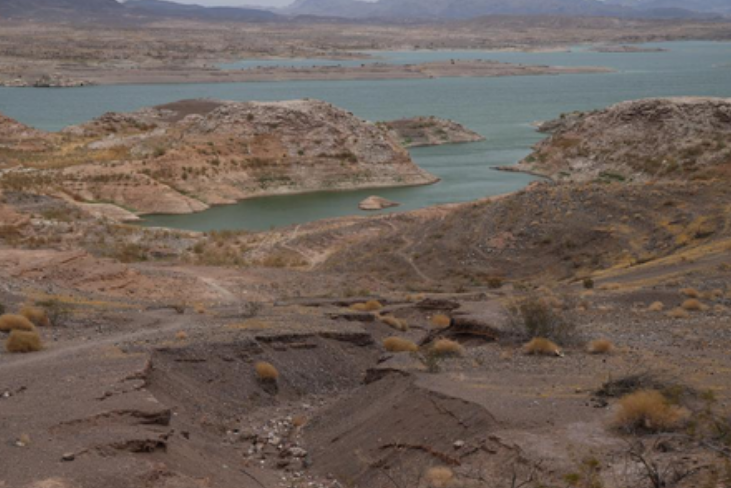

LOS ANGELES — Lake Mead and Lake Powell, the two largest U.S. reservoirs on the Colorado River, have fallen to record-low levels, raising new concerns about water supplies, agriculture and hydropower across the Southwest.
Lake Powell dropped to 3,519.91 feet above sea level Saturday, slightly below its previous record low of 3,519.92 feet set in April 2023, according to provisional data from the U.S. Bureau of Reclamation.
Lake Mead also reached a new low, falling to 1,039.85 feet Sunday afternoon. Its previous record low was 1,040.58 feet, recorded in July 2022.
Jack Schmidt, director of the Center for Colorado River Studies at Utah State University, described the basin as being “in uncharted territory.”
Lake Mead and Lake Powell, created by Hoover Dam and Glen Canyon Dam, respectively, are key components of the Colorado River system, which provides water to about 40 million people across seven U.S. states and Mexico.
The U.S. Interior Department told a Senate hearing in June that prolonged drought had reduced storage across the Colorado River system to about 34% of capacity.
Lake Powell is now about 30 feet above the minimum level at which Glen Canyon Dam can currently generate hydropower. The Glen Canyon Powerplant produces about 5 billion kilowatt-hours of electricity annually, enough to supply nearly 500,000 U.S. households.
Hoover Dam’s power plant, meanwhile, has a long-term average annual output of about 4 billion kilowatt-hours. Federal officials have warned that continued declines at Lake Mead could further reduce electricity generation.
The Bureau of Reclamation has announced plans to move additional water from Flaming Gorge Reservoir toward Lake Powell and reduce releases from Lake Powell to Lake Mead as drought conditions worsen.
Federal officials are also developing new operating rules for the Colorado River system after the current guidelines expire at the end of 2026.
On July 31, the Bureau of Reclamation released a final environmental impact statement outlining its preferred framework for managing Lake Powell and Lake Mead through 2036.
Sharon Megdal, director of the Water Resources Research Center at the University of Arizona, said the Colorado River is facing a critical situation because the two reservoirs have not experienced such low levels since they were first filled. (Source: IANS)