U.S. Senate Warns AI-Powered Scams Are Increasing Threat to Seniors


Washington — A bipartisan U.S. Senate panel has warned that artificial intelligence is making scams targeting older Americans more convincing, easier to carry out and increasingly difficult to detect.
During a hearing Wednesday titled “The AI Deception Machine: Deepfakes, Chatbots, and the New Frontier of Senior Fraud,” lawmakers examined how criminals are using deepfake videos, cloned voices and AI chatbots to impersonate relatives, professionals and public figures.
Senate Special Committee on Aging Chairman Rick Scott said Americans age 60 and older lost $7.7 billion to scams in 2025.
“AI can be used to make fraudulent videos known as deepfakes, impersonating experts and celebrities to try to fraud our seniors,” Scott said. “AI can also be used to clone someone’s voice, a terrifying development that has been used in heartbreaking and evil ways to impersonate a loved one and deceive their family.”
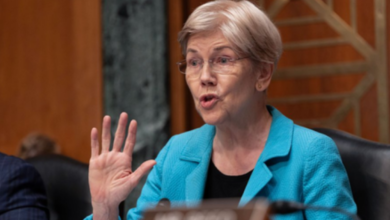
Ranking Member Kirsten Gillibrand said AI offers significant benefits but has also allowed criminals to make longstanding scams more believable and easier to conduct.
“Americans deserve to trust their own eyes and ears,” Gillibrand said.
She said she had written to major technology companies, including OpenAI and Meta, seeking information about safeguards designed to protect older adults and people with disabilities.
The committee heard testimony from Deborah Del Mastro of California, who said scammers cloned her daughter’s voice and falsely claimed she had been kidnapped.
“It was her voice. It was absolutely her voice,” Del Mastro told senators.
During the five-and-a-half-hour ordeal, the caller claimed a Mexican drug cartel had abducted her daughter and demanded ransom. Del Mastro transferred $5,400 before learning that her daughter had been safe throughout the incident.
“It was the worst day of my life,” she said, calling for stronger public awareness and safeguards against AI-enabled fraud.
Dr. David Amron, a Los Angeles surgeon, testified that scammers had created a deepfake video that falsely appeared to show him endorsing a fraudulent medical product.
“They used my name and my reputation to deceive the very people I have dedicated my career to helping and protecting,” Amron said.
He warned that such scams could undermine trust in physicians and cause patients to delay legitimate medical treatment.
Paul Benda, Executive Vice President for Risk, Fraud and Cybersecurity at the American Bankers Association, told lawmakers that generative AI was not replacing traditional scams but making them easier to operate on a much larger scale.
“Generative AI is making impersonation dramatically easier and more convincing with very little technical skill,” Benda said.
He said banks were increasingly using AI and behavioral analytics to identify suspicious transactions before money leaves customers’ accounts. He also called on technology companies and telecommunications providers to take greater responsibility for preventing scammers from reaching potential victims.
Cybersecurity expert Matthew Ferraro urged greater public education, stronger coordination among government agencies and wider adoption of tools designed to detect fabricated audio, video and other AI-generated content.
Lawmakers from both parties used the hearing to promote proposals aimed at protecting older Americans, including the creation of a national anti-scam strategy, a centralized fraud-reporting portal and stronger law enforcement training.
The panel also discussed studying the broader effects of artificial intelligence on aging populations.
The issue extends beyond the United States, as voice-cloning fraud, deepfake videos and AI-powered impersonation scams are increasingly being used worldwide to target families, bank customers and business executives. (Source: IANS)