
Study Identifies Active Fault Beneath China’s Brahmaputra Dam Project
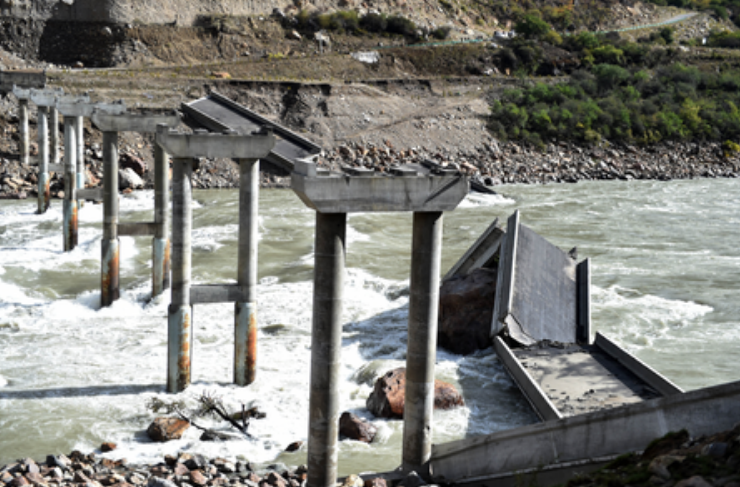

Naypyidaw–A Chinese study has identified an active tectonic fault beneath the site of China’s Medog hydropower project on the Brahmaputra River, raising concerns about the geological, environmental and regional risks associated with the massive dam.
The findings should prompt Beijing and the international community to examine whether the project’s risks have been adequately assessed, according to a report by Myanmar-based Mizzima News.
India has long argued that China’s plan to build what is expected to become the world’s largest hydropower project on the Yarlung Tsangpo, the upper course of the Brahmaputra, presents more than an engineering challenge. New Delhi has repeatedly raised concerns about the potential environmental and strategic consequences for downstream countries.
China has maintained that the project was scientifically planned and would not pose significant downstream risks.
The Mizzima News report cited a recent study by researchers from Chengdu University of Technology and the China Geological Survey that found the active Paizhen Fault runs directly beneath the Medog project.
Researchers described rock formations in the surrounding area as loose, weakly bonded and susceptible to slope failures caused by prolonged water exposure and continued tectonic movement.
The study also found that the fault has remained active since the Pleistocene epoch and continues to produce seismic activity. A magnitude 6.9 earthquake struck the northern edge of the fault in 2017.
The findings have raised questions about the structural resilience of the project, which is estimated to cost $137 billion and is located about 31 miles from the Indian border.
“The Medog project has often been framed as another milestone in China’s remarkable infrastructure story. It is intended to generate more than three times the electricity of the Three Gorges Dam and support Beijing’s twin ambitions of energy security and carbon neutrality,” the report said.
“Yet reducing the project to a renewable energy success story misses a much larger point. This is not simply a dam but an attempt to reshape one of Asia’s most strategically significant river systems through an engineering intervention of unprecedented scale,” it added.
China treats transboundary rivers as falling within its sovereign jurisdiction rather than as shared resources requiring joint governance, according to the report.
China and downstream countries do not have a comprehensive agreement governing water sharing or management of the Brahmaputra basin. Hydrological data sharing is also limited, largely seasonal and vulnerable to disruptions, leaving downstream countries dependent on Chinese assurances rather than legally binding guarantees.
“The confirmation of an active fault beneath the project only amplifies those concerns. If Chinese researchers themselves acknowledge significant geological vulnerabilities, neighbouring countries are justified in asking what contingency planning exists should those risks materialise,” the report said.
“To date, Beijing has offered little insight into independent safety assessments, emergency preparedness mechanisms or long-term monitoring arrangements,” it added. (Source: IANS)