US Indo-Pacific Commander Urges Stronger Defense Posture to Deter Regional Aggression
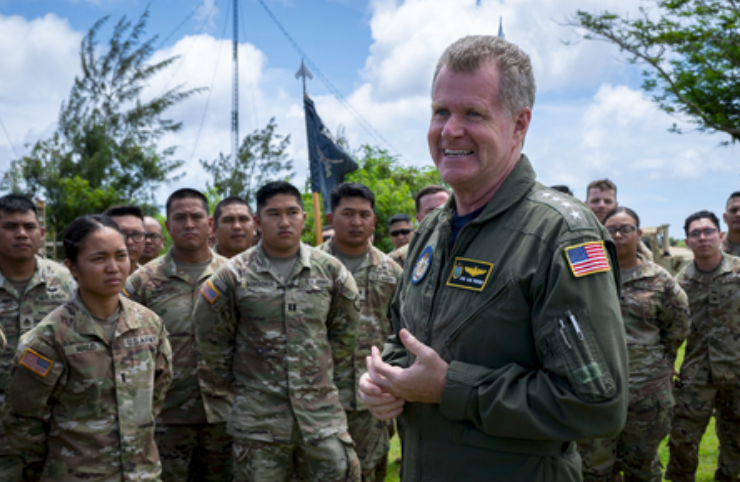

SEOUL — The commander of the U.S. Indo-Pacific Command has issued a call for the United States and South Korea to bolster their joint military capabilities in the new year, aiming to present a unified front against rising regional threats. Admiral Samuel Paparo Jr. emphasized that a reinforced defense posture is essential to ensure adversaries understand the severe consequences of military escalation.
The Admiral’s New Year’s message arrives at a time of heightened tension, as Washington increasingly look to Seoul and other regional partners to help secure the “First Island Chain.” This strategic perimeter is considered vital to maintaining American influence and countering Chinese maritime expansion in the Pacific.
“We must also continue to build a formidable, combined defence, sending a clear message to any adversary that the cost of aggression would be far too great,” Paparo stated in a message released through the Korea-U.S. Alliance Foundation and the Korea Defense Veterans Association.
The commander’s warning follows significant military activity by Beijing, which recently mobilized its Army, Navy, Air Force, and Rocket Force for drills in the Taiwan Strait. Chinese officials characterized those maneuvers as a “stern” warning against what they termed “separatist forces” and “external interference.” In response, the U.S. State Department has repeatedly called on China to cease its military pressure and return to diplomatic dialogue.
Reflecting on the progress made in 2025, Paparo noted that high-level meetings between defense chiefs and military commanders have solidified an “ironclad” commitment between the two nations. He urged the allies to move beyond rhetoric and embrace a “path of shared innovation” to maintain their edge.
“Our shared task is to translate this momentum into decisive action that ensures peace and security of the Korean Peninsula and the broader lndo-Pacific region,” he said.
Supporting this sentiment, Gen. Xavier Brunson, Commander of U.S. Forces Korea, expressed gratitude to the organizations that maintain the cultural and military ties between the two countries. Brunson noted that after more than seven decades, the alliance remains “strong, relevant, and ready for the challenges ahead.” (Source: IANS)