Report Flags Deep-Rooted Bias Against Sindhis in Pakistan
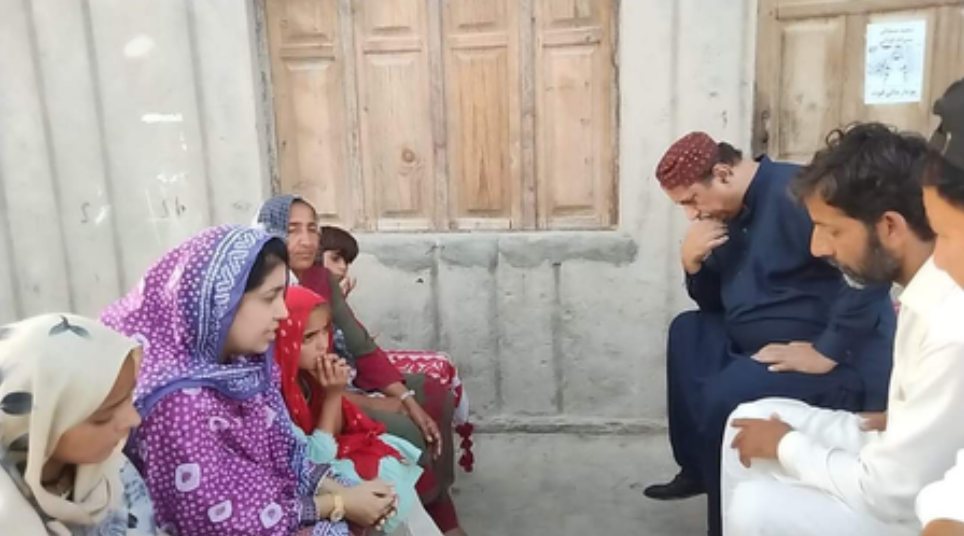

Islamabad–A report has highlighted what it described as “entrenched prejudice” against the Sindhi community in Pakistan, warning that long-standing biases rooted in both state institutions and society continue to shape politics, media narratives and everyday life.
According to the report, the persistence of racism against Sindhis has created a climate of fear that silences dissent, with individuals who speak out against discrimination facing hostility and security threats. It cited the case of Shehzad Ghias Shaikh, a well-known podcaster, writer and social media presenter, who is reportedly facing serious threats after openly addressing anti-Sindhi prejudice, particularly in Karachi.
Writing in the Pakistani daily The Friday Times, US-based political observer Mohammad Ali Mahir traced the origins of such bias to the early years of Pakistan. He recalled remarks attributed to the country’s first Prime Minister that mocked Sindhi culture, arguing that such attitudes laid the foundation for decades of discrimination that have since become normalised.
Mahir also pointed to instances in popular media that, he said, reflect casual racism against Sindhis. He cited a television programme featuring prominent former cricketers and a singer, during which derogatory remarks were allegedly made about a Sindhi bowler, drawing laughter rather than condemnation.
The report further referred to recent controversies, including opposition to the Sindh government’s decision to include the Ajrak symbol on vehicle licence plates in the province. In one widely criticised incident, a Jamaat-e-Islami councillor in Karachi was accused of mocking the symbol by placing an Ajrak-themed number plate around a donkey’s neck and sharing the image on social media.
Mahir noted that such actions are part of a broader pattern, recalling statements by political leaders and former rulers that questioned the competence or merit of Sindhis. He cited remarks by former military ruler Pervez Musharraf, who had suggested that Sindhis were not suited for top positions, as well as political rhetoric that he said sought to exploit ethnic divisions in Karachi.
Highlighting continued marginalisation, Mahir wrote that Sindhis remain underrepresented in key positions of power, including in the federal cabinet and the judiciary. He noted that the Supreme Court went for an extended period without a Sindhi-speaking judge, attributing this to resistance from influential quarters.
“Shehzad Ghias Shaikh has emerged as a voice of conscience by openly challenging hatred against a major community in the country,” Mahir wrote, adding that the threats he faces underline the risks associated with speaking out against deeply embedded prejudice.
The report concludes that the pattern of discrimination against Sindhis represents a continuum of state-backed and socially reinforced bias that has persisted from Pakistan’s early years to the present day. (Source: IANS)