
Rabi Crop Sowing Crosses 580 Million Hectares, Government Data Shows
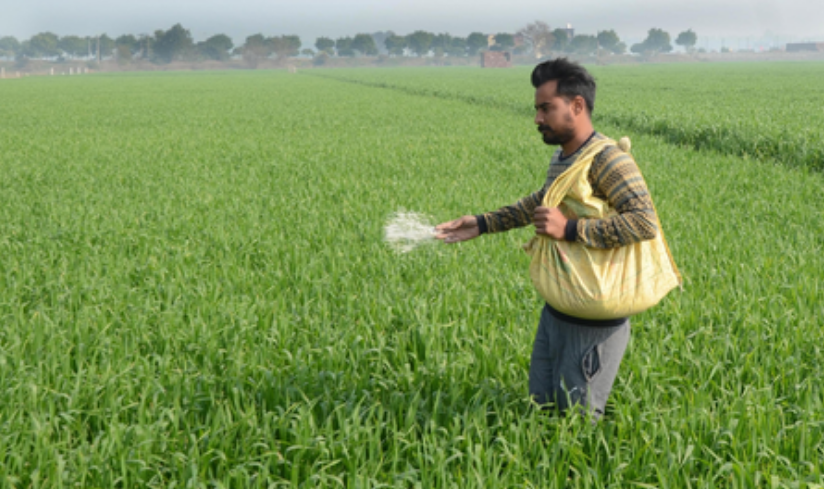

NEW DELHI, India — The total area sown under rabi crops during the ongoing winter season has increased to 580.70 lakh hectares as of December 19, up from 572.59 lakh hectares during the same period last year, according to data released by the Ministry of Agriculture and Farmers Welfare on Monday.
The rise of 8.11 lakh hectares year-on-year is expected to support higher agricultural output, improve farm incomes and help contain food inflation in the coming months.
Official figures show that wheat acreage has increased to 301.63 lakh hectares, compared with 300.34 lakh hectares during the corresponding period last year.
The area under pulses, including urad, lentil (masur) and moong, has seen a sharper rise, increasing by 3.72 lakh hectares to 126.74 lakh hectares from 123.02 lakh hectares a year earlier.
Coarse cereals and millets such as jowar, bajra and ragi have also recorded modest growth. The area sown under these crops has risen to 45.66 lakh hectares, up from 45.05 lakh hectares during the same period last year.
Oilseed cultivation, particularly rapeseed and mustard, has expanded as well, with acreage increasing by 0.68 lakh hectares to 93.33 lakh hectares, compared with 92.65 lakh hectares in the previous year.
Officials attributed the overall increase in rabi sowing to favorable monsoon rains, which supported planting in unirrigated areas that account for nearly half of India’s total farmland.
Meanwhile, the Cabinet Committee on Economic Affairs approved higher minimum support prices for all mandated rabi crops on October 1 for the 2026–27 marketing season, with the aim of ensuring remunerative returns for farmers.
The support prices are announced well ahead of the sowing season to allow farmers to plan their cropping patterns and maximize earnings.
Under the revised structure, the highest increase in minimum support price has been announced for safflower at Rs 600 per quintal, followed by lentil (masur) at Rs 300 per quintal. Rapeseed and mustard, gram, barley and wheat will see increases of Rs 250 per quintal, Rs 225 per quintal, Rs 170 per quintal and Rs 160 per quintal, respectively.
The revised support prices align with the Union Budget 2018–19 policy of fixing MSPs at a minimum of 1.5 times the all-India weighted average cost of production.
Based on official estimates, the expected margin over production costs stands at 109 percent for wheat, followed by 93 percent for rapeseed and mustard, 89 percent for lentil, 59 percent for gram, 58 percent for barley and 50 percent for safflower.
Officials said the higher support prices are intended to ensure better returns for farmers while also encouraging crop diversification. The cost of production calculations include expenses such as labor, machinery, seed, fertilizer, irrigation, fuel, depreciation, interest on working capital and the imputed value of family labor. (Source: IANS)