
By Akash Deep
BOSTON–A distinctive highlight of the LearnQuest Music Festival 2026 will be a rare jugalbandi that brings together two rich streams of Indian classical music: the expressive voice of the Hindustani shehnai and the lyrical depth of the Carnatic violin.
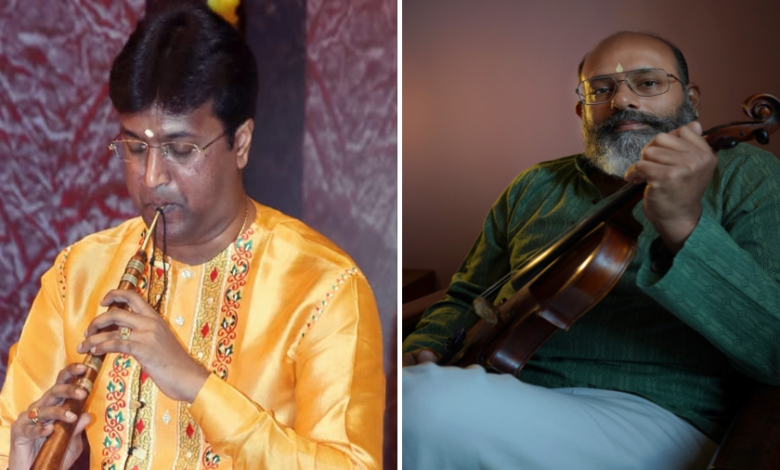
Taking place on April 4, this program features Ashwani Shankar on shehnai and V.V.S. Murari on violin, accompanied by Pandit Arup Chattopadhyay on tabla and Sai Giridhar on mridangam. Together, they form an ensemble that reflects the festival’s central theme—Ensemble: Making Music Together—through a shared space of listening, response, and improvisation.
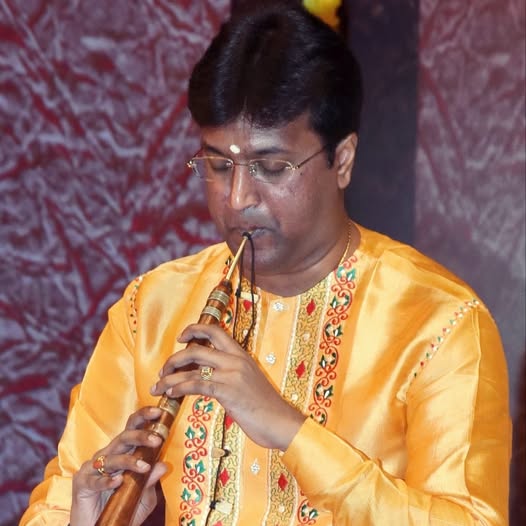
In Indian classical music, a jugalbandi is more than a duet. It is a musical dialogue, or samvaad, between equal artists. Each performer brings a distinct tradition, yet remains open to exchange, allowing the music to unfold through interaction rather than hierarchy. When this dialogue bridges Hindustani and Carnatic systems, the result is both contrast and convergence—two musical languages meeting on common ground.
At the center of this encounter is the shehnai, an instrument deeply associated with the Hindustani tradition and the Banaras gharana. With its reedy, penetrating tone and strong connection to vocal expression, the shehnai carries both a ceremonial and contemplative character. Ashwani Shankar, trained in a distinguished lineage of shehnai players, brings to it a style shaped by the gayaki ang, or vocal approach, that lends his performances depth and nuance.
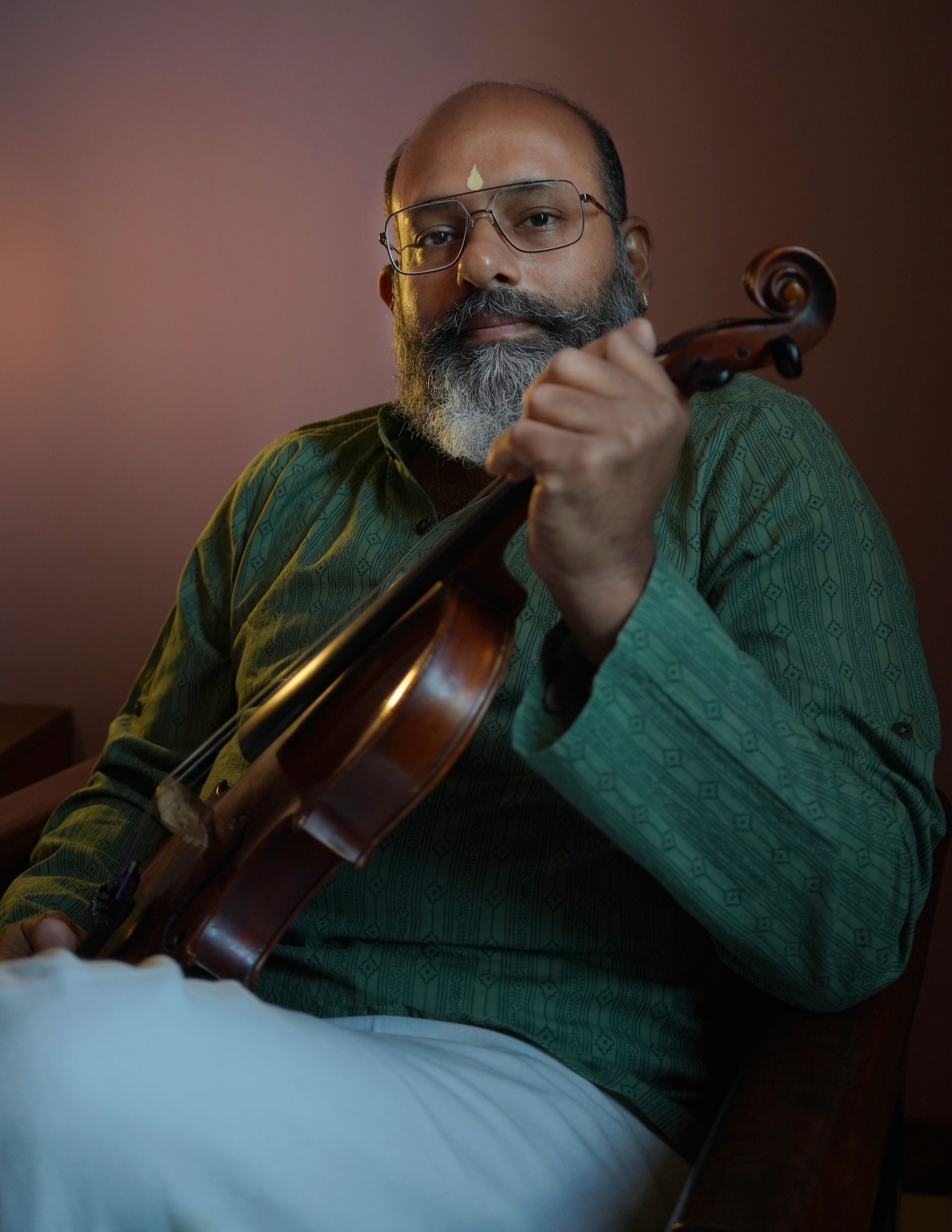
Opposite him is the Carnatic violin, an instrument that has, over centuries, been adapted to closely mirror the human voice. V.V.S. Murari, a fourth-generation musician trained under his father V.V. Subrahmanyam and guided by Semmangudi Srinivasa Iyer, is known for his tonal richness and expressive clarity. His playing balances tradition and creativity, making him a compelling partner in a cross-tradition exchange.
The rhythmic foundation of the concert brings together two complementary systems. The tabla, central to Hindustani music, is known for its tonal precision and intricate patterns, while the mridangam, the principal percussion instrument of Carnatic music, provides a deep, resonant framework shaped by highly structured rhythmic cycles. In this ensemble setting, they do not merely accompany but actively engage in the musical conversation.
Together, these artists create a performance that is not about blending traditions into one, but about allowing them to meet, respond, and evolve in real time. The shehnai and violin—wind and string—offer distinct yet complementary voices, shaping a dialogue that is at once spontaneous and grounded in tradition.
As part of a festival uniquely dedicated to presenting both Hindustani and Carnatic music within a single shared space, this jugalbandi offers audiences a rare opportunity to experience Indian classical music as a living conversation—where the winds of the North meet the strings of the South.