By Jayanti Bandyopadhyay
I am delighted to write about SETU’s (Stage Ensemble Theatre Unit) upcoming production of Human Vivekananda, which will be staged for eight performances in March at The Mosesian Center for the Arts in Watertown, Massachusetts, following two successful stage readings in September 2025. Since SETU’s inception in 2003, I have performed many memorable roles in Indian epics, historical dramas, and socially themed plays – many written and directed by my co-founder and director, Subrata Das.
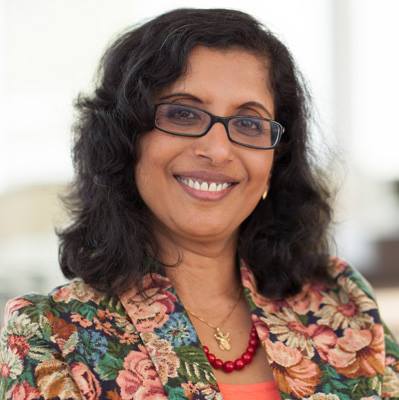
When he asked me to portray Bhuvaneswari Devi, the mother of the iconic monk Swami Vivekananda, in his newly written Human Vivekananda (see Disclaimer below), I accepted with both joy and apprehension. How, as an artist, could I authentically present the deeply human relationship between this spiritual giant and his mother?
I grew up in Kolkata in a household where Ramakrishna, Sarada, and Vivekananda (Naren) were regarded almost as family members. I remember reading about young Naren’s mischievous adventures and how only his mother could calm him. Their bond was tender and profound. I also visited Naren’s ancestral home in Kolkata – now a museum and a branch of the Ramakrishna Order – where he once played as a child.
Bhuvaneswari Devi always inspired me with her indomitable strength, deep piety, and unwavering commitment to truth despite life’s hardships. In preparing to embody her, I discovered facets of her life that I had not known before. She was well versed in English and personally taught her sons their early lessons. Remarkably, in the late nineteenth century, she ensured that her daughters received a college education – a rare and progressive stance for that era. She was known for her melodious voice, striking beauty, penetrating eyes, and regal bearing. Though she endured immense struggles, she was made of steel. Vivekananda inherited from her not only intellectual depth and spiritual conviction, but also her charisma and dignified presence.
 During his time in America, Swami Vivekananda often paid the highest tribute to his mother in his lectures, deeply impressing Western audiences. Mrs. Sara Bull of Cambridge, Massachusetts, wrote a letter honoring Bhuvaneswari Devi – an exchange that is depicted in our play. Across centuries, even monks who renounced worldly life – such as Adi Shankaracharya and Sri Ramakrishna, Vivekananda’s guru – could not sever their bonds with their mothers. The human connection endures.
SETU is presenting Human Vivekananda with a double cast. I portray Bhuvaneswari Devi in the Advaita Cast, while Chandrala Malkood plays the role in the Vedanta Cast. At SETU, collaborative learning is central to our artistic process. As Chandrala reflects:
 “Collaborating with Jayanti has been an extraordinary artistic journey, especially while portraying one of the most demanding characters of my career. Throughout the play, she experiences grief, doubt, longing, and despair – yet each challenge ultimately deepens her spiritual surrender. Bringing this duality to the stage – the intensity of lived emotion alongside
the serenity of spiritual detachment – has been both technically demanding and profoundly fulfilling.”
My own artistic challenge lies in portraying Bhuvaneswari’s inner conflict: her pain and disapproval of Naren’s choice to embrace monastic life, alongside her pride in his world-renowned achievements that made her, in many eyes, “the mother of the world.” Can I convey her restrained grief at losing her beloved son while she was still alive? Chandrala and I both feel privileged to bring this deeply human “monk and mother” relationship to the stage.
 It has also been immensely rewarding to work with Vivek Nair and Subrata Das (CT), who portray the iconic monk. As they describe their challenge: “Bringing his vulnerability toward his mother and the audience, while still embodying the strength and conviction associated with Vivekananda.”
Another compelling relationship explored in the play is that between Swami Vivekananda and Ajit Singh, the King of Khetri. These two remarkable individuals formed such a close friendship that Swamiji, without hesitation, could request the King for modest financial support for his mother after his demise. For Ajay Rathi and Pramod Khanchandani, who portray King Ajit Singh, “Bringing out the emotion of King Ajit Singh is challenging, for he stood beside Swami Vivekananda as both trusted friend and devoted disciple – torn between friendship and reverence, doubt and belief, yet forever moved by the power of his principles – and assisting him with his journey to Chicago.”
 As costume designer, I worked closely with the actors to recreate the historical appearance of the fourteen characters, drawing upon archival material and published sources. One of the most challenging costumes to source outside India has been Swami Vivekananda’s distinctive saffron robe and turban. Subrata and Vivek shared: “We worked closely with Jayanti in researching historical references and archival material to study what Vivekananda and Bhuvaneswari Devi wore during that period, developing costumes that felt authentic to the time and truthful to the characters.” Similar care was taken in designing costumes for the Western women, Sarada Devi, Ramakrishna, and Sister Nivedita, among others.
 At SETU, we learn by doing – building bridges across human relationships through theater. We invite you to experience our passionate work on stage.
Please join us to witness the inspiring journey of Swami Vivekananda – from his early struggles and transformative meeting with Sri Ramakrishna, to his iconic Chicago address, his Vedantic teachings on non-dualism, and his exchanges with disciples such as Sister Nivedita and Nikola Tesla.
 A strong DOUBLE CAST will bring 14 characters to life. Tickets at: www.setu.us
Stage Ensemble Theatre Unit, Inc. is a registered 501(c) (3) not-for-profit corporation.
Cast ADVAITA: March 6, 8 (for IFNET members only), 14, 20 Cast VEDANTA: March 7, 13, 15, 21
Posters: 𝐌𝐚𝐧𝐢𝐬𝐡 𝐃𝐡𝐚𝐥𝐥 Media Publicity: 𝗦𝗺𝗿𝗶𝘁𝗶 𝗝𝗮𝘆𝗮𝗸𝘂𝗺𝗮𝗿, 𝗡𝗶𝗿𝗺𝗮𝗹 𝗞𝘂𝗺𝗮𝗿, Ronita Panda, and Rahul Nair
Public Relations: Anil Matta, Mukta Munjal, Yogita Miharia Lights and Sound: 𝗗𝗲𝘃𝗲𝗻 𝗔𝘁𝗻𝗼𝗼𝗿, Janique Choux-Das, 𝗣𝗿𝗮𝘁𝗲𝗲𝗸 𝗣𝗮𝘂𝗹, 𝗮𝗻𝗱 𝗥𝗮𝗷𝗲𝗲𝘃 𝗡𝗼𝗵𝗿𝗶𝗮 Slides and Brochure: Subrata Das (CT), Ketan Dave, Sangeet Srikanth Backstage: Sridhar Pola, 𝗡𝗼𝗼𝗿𝗮𝗶𝗻 𝗕𝘂𝘅𝗮𝗺𝘂𝘀𝗮 Costume Design: 𝗝𝗮𝘆𝗮𝗻𝘁𝗶 𝗕𝗮𝗻𝗱𝘆𝗼𝗽𝗮𝗱𝗵𝘆𝗮𝘆 Pictures: 𝗙𝗼𝘁𝘂𝗗𝘂𝗻𝗶𝘆𝗮 (𝗩𝗮𝘀𝘂𝗱𝗵𝗮 𝗞𝘂𝗱𝗿𝗶𝗺𝗼𝘁𝗶 𝗮𝗻𝗱 𝗦𝗮𝗻𝗷𝗮𝘆 𝗞𝘂𝗱𝗿𝗶𝗺𝗼𝘁𝗶) Masters of Ceremony: Rimi Sarkar, Guru Anandh Associate Directors: Jayanti Bandyopadhyay, Sridhar Pola, Ketan Dave, and Gitanjali Srivastava Written, Casting, and Directed by 𝗦𝘂𝗯𝗿𝗮𝘁𝗮 𝗗𝗮𝘀
Cast ADVAITA | VEDANTA
Stage Readers: Rimi Sarkar, Priyanka Banerjee
INDIAN CHARACTERS
Swami Vivekananda: Vivek | Subrata (CT) Sri Ramakrishna: Ketan | Amitabh Sarada Devi: Sangeet | Mona | Swapneel Rakhal Ghosh: Sunil | Deven Bhuvaneswari Devi: Jayanti | Chandrala Mahendra Nath Dutta: Manish | Ujwal P.C. Mozoomdar: Nilay | Rahul Courtesan: Viral | Nishtha Ajit Singh: Ajay | Pramod Alasinga Perumal: Mustufa | Harshit
WESTERN CHARACTERS
Sister Nivedita: Gitanjali | Mahima Josephine Macleod: Tanni | Mukta Sara Bull: Yogita | Shriti Sarah Bernhardt: Cini | Janique Kate Sanborn: Nivedita | Dolly Mary Tappan Wright: Nishtha | Heena | Swapneel Nikola Tesla: Ujwal | Manish John Henry Wright: Aveek | Rahul | Nilay

Disclaimer
This stage play is an attempt to humanize and universalize Swami Vivekananda – the most influential Hindu monk of the millennium – by highlighting the struggles in his life and the essence of his Upanishadic philosophy. The playwright has made every effort to remain faithful to the chronology of events and to Vivekananda’s own words, drawing upon extensive research of hundreds of letters, several biographies, and hundreds of articles by numerous authors. Nevertheless, some degree of subjectivity may have been introduced in dramatizing certain characters and life events. Any significant deviation or alternative portrayal is purely unintentional.
About the Author
Jayanti Bandyopadhyay is Co-founder and an actor of SETU since its inception in 2003. She is Professor Emerita of Salem State University in Salem, Massachusetts.
Primary Source: Swami Vivekananda’s Devotion to His Mother Bhuvaneshwari Devi, by Swami Tathagatananda, https://www.vedantany.org/articles/blog-post-title-three-74bnh-r3e5a-6xlny-yel5w-hxhj9-gn8gw-lpz6y-65slb-5h3n7-s4lkt-tkyny-htw6z-zhjzc-ex6gt-emwwx-2csc7-xg975-wzdjl-w33e4)