Report Says Most Canadian Sikhs Reject Khalistan Separatism as Gang Violence and Extremism Converge
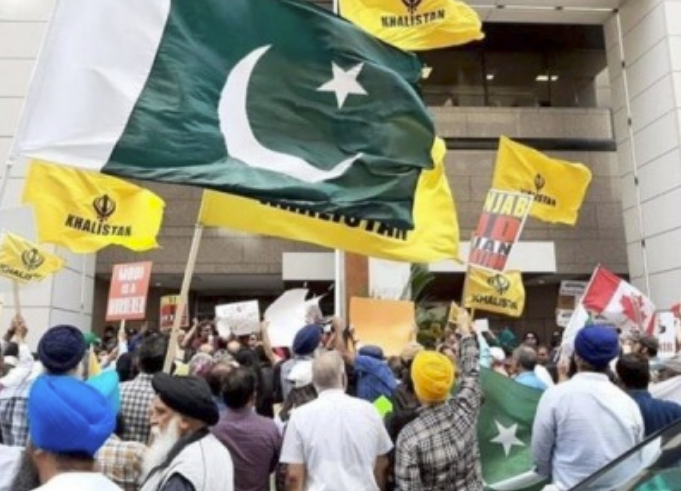

TORONTO/NEW DELHI — A new report warns that Canada is at a critical moment in its handling of Khalistani extremism and Punjabi-Canadian gang violence, urging authorities to recognize the growing financial and operational links between the two. The findings suggest that while most Canadian Sikhs oppose separatism and violence, a small criminal fringe is fueling both organised crime and extremist activity.
The report, highlighted Wednesday, argues that Canada must strengthen border security, expand financial-intelligence cooperation with trusted international partners, and enforce a zero-tolerance policy against laundering drug profits through political or charitable channels.
Canada’s Sikh population, nearing 800,000, is one of the largest in the world outside India. The vast majority are law-abiding citizens contributing significantly to trucking, construction, farming, and small business. However, according to author and filmmaker Vikram Zutshi, who wrote the analysis for NDTV, a violent minority within the Punjabi-Canadian community has spent the past two decades building deep connections with transnational organised crime.
Zutshi wrote that profits from cocaine, methamphetamine, and fentanyl trafficking are being used not just to acquire weapons and vehicles but also to bankroll pro-Khalistan rallies, diaspora-based referendums, and legal defense funds for extremists. Law-enforcement agencies in Canada have long identified Punjabi-Canadian gangs as key players in the cross-border drug trade, with more than 200 gang-related homicides in British Columbia linked to rival groups since 2007.
Citing law-enforcement sources in both Canada and India, the report noted that a significant share of cocaine and fentanyl flowing into Western Canada is handled through networks controlled by certain Punjabi-Canadian organised crime groups. Some officials believe portions of these criminal proceeds are being diverted to support Khalistan-linked separatist activities abroad.
Despite these concerns, the report emphasized that most Canadian Sikhs oppose violence and extremism. Prominent voices within the community, including former British Columbia premier Ujjal Dosanjh and the World Sikh Organisation of Canada, have repeatedly condemned the misuse of gurdwaras for political agitation and called for stronger measures to prevent gang recruitment among Sikh youth.
The report argues that the issue persists in part because political leaders in key electoral districts such as Brampton and Surrey have been hesitant to confront it directly.
For the majority of Sikh Canadians seeking peaceful lives and strong community ties, dismantling what the report describes as a “criminal-extremist nexus” is essential. According to the analysis, doing so is not only a law-enforcement necessity but also the only way to reverse the harm caused by a small but influential minority. (Source: IANS)