Report says agroecological homestead farming boosts incomes and nutrition for tribal women in central India
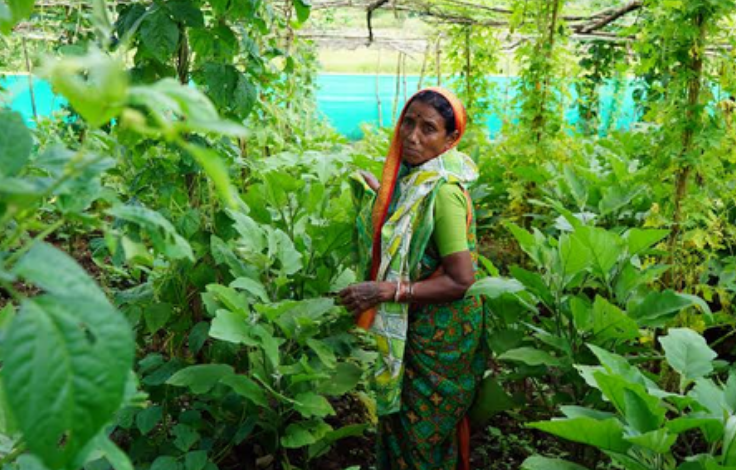

NEW DELHI — An agroecological homestead farming model is helping tribal women in central India increase agricultural production, improve nutrition, and raise household incomes, according to a new report.
The initiative, implemented in Madhya Pradesh’s Mandla district, focuses on transforming small backyard plots into diversified farms that produce a variety of vegetables and other crops.
According to the report by Eco-Business, the program is led by the CGIAR Multifunctional Landscapes Program in partnership with the nonprofit Professional Assistance for Development Action (PRADAN) and works with adivasi communities in the region.
The approach involves cultivating vegetables and crops at different heights within the same plot, allowing farmers to maximize limited space while improving crop diversity.
Findings cited from the International Water Management Institute show that the model has significantly improved agricultural outcomes. Production diversity has increased by 350 percent, dietary diversity has doubled, and consumption of nutrient-rich foods such as leafy greens has risen by about 70 percent.
“Protein intake and household savings have also improved through backyard poultry, and families’ dependence on external markets for produce and fertiliser has fallen,” the report said.
The farming method combines several sustainable practices, including crop rotation, bio-composting, rainwater harvesting, and integrating livestock with crop farming. Organic manure from animals is used as fertilizer, while crop residue and surplus produce are used as animal feed.
The report also highlights the growing role of women in managing these farms. Women farmers are increasingly taking responsibility for production and decision-making on their homestead plots, challenging traditional social norms.
Previously, many farmers in the Chimkatola and Kevlari areas of Mandla district practiced monocropping, typically growing maize in upland areas and rice in low-lying fields near rivers.
“Earlier, we bought [these] from the market, but now, we make it all at home,” said Kusum, a resident of Chimkatola.
Saurav Kumar, team coordinator at Professional Assistance for Development Action, said farming in the region had been vulnerable to erratic rainfall, soil degradation caused by cultivation on steep slopes, and fluctuating market prices influenced by changing fuel costs.
Backyard plots were often left unused or only occasionally planted with maize, he said.
Under the program, each woman farmer cultivates roughly 400 to 500 square meters of land, using bio-fertilizers such as jeevamrut and panchagavya, which are made from cow dung and urine mixed with other organic materials. (Source: IANS)