
Pearls of Wiston: From Ruin to Resilience: Lessons from Japan and Ancient India on Discipline and Action

By Upendra Mishra
BOSTON–Have you ever wondered how a nation can rise from near-total destruction—cities flattened, population scarred, economy in ruins—and within a single generation become a global economic powerhouse? Japan did just that.

After World War II, after the atomic bomb and national humiliation, Japan not only rebuilt itself but became synonymous with technological innovation, manufacturing precision, and high standards of living that few countries had ever seen. Its rise was not an accident of geography, luck, or foreign aid. It was cultural.
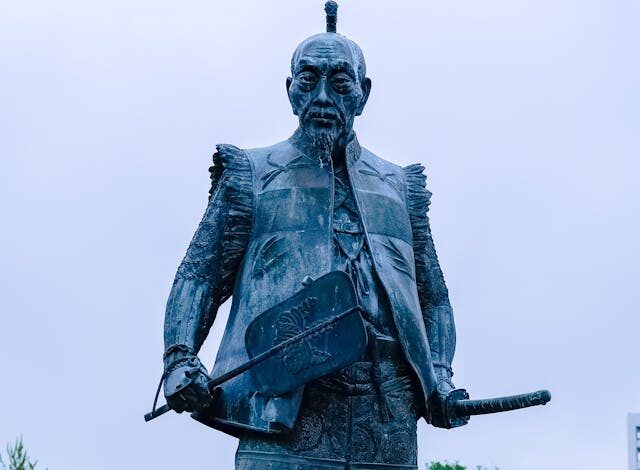
Lately, I have been reading extensively about the samurai and their centuries-old code of discipline, focus, and self-mastery. From the 15th century onward, Japan was a land divided: competing domains, warlords in constant conflict, small fiefdoms vying for survival. Yet even in that chaos, a powerful ethos emerged: the Bushido, the “way of the warrior.” This was a culture of action, not wishful thinking; of mastery, not dependence; of discipline, not divine intervention. Nature was studied, learned from, respected—but no invisible hand dictated outcomes.
This mindset did not die with the samurai. It became the bedrock of modern Japanese enterprise. Companies like Toyota revolutionized efficiency and quality through Kaizen and the Toyota Production System. Honda exemplified engineering precision and innovation. Panasonic and Hitachi built global reputations for reliability and long-term thinking. Even in optics and consumer electronics, Canon and Nikon turned craftsmanship into global advantage. In design and creativity, Nintendo reinvented entertainment with disciplined innovation, while Muji turned simplicity into philosophy.
The common thread across these companies is the same as that which guided the samurai: discipline, focus, iteration, and responsibility. Problems are solved systematically, not left to prayer or luck. Success is earned, not expected.
A Mirror to India
This made me reflect on India, my homeland. Historically, India was no stranger to fragmentation. Before colonial rule—and long before the arrival of Mughal or British powers—regional kingdoms were in near-constant conflict, much like feudal Japan. Yet culturally, a radically different ethos prevailed.
In India, the divine, or God, was central. Every aspect of life—from harvest to warfare, from wealth to health—was filtered through God, gods, and intermediaries: priests, gurus, and mystics. Miracles were expected, blessings sought, curses feared. Faith became both comfort and compass. Over centuries, the focus on self-discipline and systematic action was often overshadowed by the belief that outcomes could be influenced by unseen forces rather than human effort. Temples, mosques, and rituals proliferated, reinforcing a worldview where the divine acted as both guide and gatekeeper.
And yet, this was not always the case. In India’s earliest philosophical texts, especially the Upanishads, the emphasis was on the Self, on consciousness, and on disciplined action. The ancient thinkers championed inquiry, reflection, and mastery of the mind—actions grounded in reason, not ritual. That era saw unparalleled prosperity, philosophical innovation, and scientific exploration. The power of self-directed effort, rather than reliance on the divine, created civilizations that were advanced for their time.
Comfort vs. Responsibility
Why does Japan’s story resonate so strongly today? Because it reminds us of a simple, yet radical idea: results come from disciplined human action, not blind faith or hope.
Faith can be comforting. It can be a refuge when life is unpredictable. But when it replaces action, when it becomes a substitute for effort, the consequences can be staggering. Civilization does not advance through prayer alone—it advances through iteration, problem-solving, and disciplined perseverance.
The samurai understood this intuitively. Their training emphasized:
- Total responsibility for outcomes
- Clarity and calm under pressure
- Relentless self-improvement
- Consistent, disciplined action
- Adaptation when methods fail
Modern Japanese corporations exemplify these principles in the boardroom and on the production line. The lesson is universal: progress is never bestowed. It is earned.
A Forgotten Parallel
India once shared this ethos. The Upanishadic era valued the Self, action, and disciplined inquiry above ritual or reliance on intermediaries. Knowledge, skill, and personal mastery were paramount. The moment human action was replaced by blind faith, the trajectory shifted. Those who claimed to mediate the divine—the gurus, priests, and mystics—became gatekeepers. Systems of dependence replaced systems of self-discipline. In today’s high-tech era, this reach has only multiplied. The lesson is clear: rediscover the power of human agency.
Japan teaches us that resilience and civilization are built on action, not luck. India reminds us that the tools for greatness were always within us—self-awareness, discipline, and relentless effort.
Civilizations rise when people act, iterate, and persist. They stagnate when they wait, hope, or pray. The difference between a nation rebuilt and a nation in decline is not divine favor—it is the courage to take responsibility, day after day, with unwavering discipline.
History is not kind to the passive. It rewards the relentless.
(Upendra Mishra is the founder of Precise Marketing & Media and a leading advocate for rethinking how marketing drives business growth. Through his “Marketing Upside Down” perspective, he challenges the traditional focus on marketing activity and instead emphasizes revenue as the only metric that matters.With more than 30 years of experience, Upendra has developed the Precise Marketing System, a proven framework that helps companies uncover revenue leaks, focus on high-value opportunities, and build scalable growth engines. His approach has delivered measurable results, including helping a company grow from $14 million to $55 million in just three years. He is the author of Precise Marketing: The Proven System for Growing Revenue in a Noisy World, where he outlines his philosophy for succeeding in today’s crowded and uncertain marketplace. He is also the author of After the Fall: How Owen Lost Everything and Found What Truly Matters. For more, vivit: www.UpendraMishra.com)