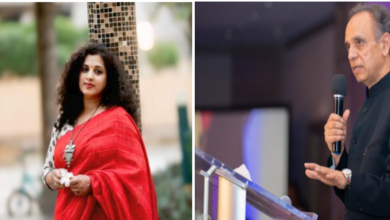
Outstanding Women of 2026: Monica Shah: Championing the Underdog with Conviction and Courage


BOSTON — “Helping people vindicate their rights in our complex legal system, no matter what challenge they are facing, is why I go to work every day.” For Monica Shah, that commitment is more than professional purpose — it is the throughline of a career built on defending the underdog.
 A partner at Zalkind Duncan & Bernstein LLP, Shah is a criminal defense and civil rights attorney whose work spans state and federal courts. She represents individuals facing serious felony charges, white-collar investigations, employment discrimination, and Title IX matters — often at the most stressful and defining moments of their lives.
“I’m extremely proud of my work representing people who have the courage to fight against powerful institutions,” she says, “be it the government, corporations, or universities.”
That courage mirrors her own path. After law school, Shah chose not to follow the traditional big-firm route. Instead, she began her career at a small civil rights firm in New York before joining what was then a small Boston-based practice. Today, she is a partner at a firm that is now primarily woman-owned and expanding.
“I took the risk of taking a different path,” she reflects. “I was lucky to be supported by my parents and my husband in all my endeavors.”
Her work has earned widespread recognition. Shah has been named Lawyer of the Year for Employment Law – Individuals (2024), consistently listed in Best Lawyers in America, recognized as a Top 50 Woman Super Lawyer in Massachusetts, and holds the AV Preeminent® rating from Martindale-Hubbell — distinctions that reflect both legal excellence and the respect of her peers.
But beyond accolades, her driving force is deeply personal. “Being underestimated, be it for my height, how I look, or the cause I represent, has driven me to do the type of work I do and represent the underdog.”
In recognition of her leadership in law and her steadfast advocacy for justice, Shah has been named one of INDIA New England News’ Outstanding Women of 2026. She will be honored at the 23rd Annual Women of the Year Awards Gala on March 14 at the Burlington Marriott Hotel in Burlington, MA, an evening expected to bring together approximately 400 community leaders and changemakers.
Her philosophy is rooted in fairness — and gratitude. Inspired early on by John Rawls’s theory that justice requires structuring society around the needs of the least fortunate, Shah carries that lens into every courtroom and community space she enters.

At her core, she says, she never forgets the support system that made her journey possible. “I recognize that I am only where I am because of the family and friends who have supported me along the way.”
In a Q&A with INDIA New England News, Shah reflects on resilience, representation, civil rights, family, vinyl records — and why she believes justice must always make room for the least powerful voice in the room.
INDIA New England News: How would you describe the work you do in your own words—and what part of it gives you the greatest sense of meaning or joy?
Monica Shah: I am a criminal defense and civil rights attorney. I advocate for individuals who are often facing the most stressful times of their lives, either criminal charges or discrimination or other inequities at work or school. Helping people vindicate their rights in our complex legal system, no matter what challenge they are facing, is why I go to work every day. I’m extremely proud of my work representing people who have the courage to fight against powerful institutions, be it the government, corporations, or universities.
INE: Is there a cause, charity, or community initiative close to your heart? What drew you to it, and how are you personally involved?
MS: I am on the Board of Lawyers for Civil Rights, which has been on the forefront of protecting immigrants’ rights, as well as economic, education, housing, and voting rights in Massachusetts and nationally. I became involved by joining the Board and doing pro bono work for the organization, including representing employees and students facing race discrimination and engaging in voter protection work. Organizations like LCR are essential to protecting our community against the rollback of rights by our government.
INE: Outside of your professional life, what activities or interests help you recharge and stay grounded?
MS: I keep myself busy with my husband, three kids, and our dog Clover. I love running around the Esplanade when weather permits, and we spend winter weekends p in Vermont, where my family does most of the skiing. I am currently obsessed with my new turntable and collecting vinyl. If you have an old record collection, call me!
INE: Looking back, what impact are you most proud of making—whether in your community, your organization, or your professional field?
MS: I am really proud of taking a different path than many others did after law school. I never worked at a big firm, and instead worked at a small civil rights firm in New York and then joined my small firm here in Boston, Zalkind Duncan & Bernstein LLP. I was lucky to be supported by my parents and my husband in all my endeavors, and took the risk of taking a different path as a result. Now, I am a partner at my firm, which is primarily woman-owned now and is expanding and thriving.
INE: What is a skill, strength, or talent people may not immediately associate with you, but one that has shaped your journey in important ways?
MS: I think people are often surprised to see that a short Indian woman has the voice and confidence to be a trial attorney. Being underestimated, be it for my height, how I look, or the cause I represent, has driven me to do the type of work I do and represent the underdog.
INE: Is there a book (or a few) that has stayed with you or influenced how you think, lead, or live?
MS: Early in law school, I read Justice as Fairness by John Rawls, who advocated for structuring political systems and decisions to consider the needs of the least fortunate members of society because any of us could be born in different circumstances. I often think of this book in my work and when I think of issues affecting the community around me.
INE: Who has inspired or influenced you most in your life, and what lessons from them continue to guide you today?
MS: My parents, Rama and Raju Shah, are hands down the most inspirational people in my life. It was amazing to be raised by two people who had the courage to envision a life for themselves beyond their villages in Gujarat, who broke barriers in their professions as physicians, built a community and bridges to other communities in a foreign land, and took care of their family and extended family. Whenever I am anxious, I think nothing could be more difficult than what my parents and their friends did so many decades ago, and it gives me the kick in the pants I need.
INE: What core value or principle do you consciously try to live by, both personally and professionally?
MS: I recognize that I am only where I am because of the family and friends who have supported me along the way, and try to make sure I express gratitude and appreciation for the many teammates I’ve had in my life, both personally and professionally.
INE: If you could spend time in conversation with one person—past or present—who would it be, and what would you hope to learn from them?
MS: Paul McCartney, the hardest working and most talented Beatle, in my humble opinion. I would want to learn about how he transitioned his career in each decade of his life, and how he is able to keep going with his passions at 80. And maybe he would bring me an original Abbey Road to put on my record player!