Nepal Election Upset Seen as Blow to China-Backed Leftist Parties
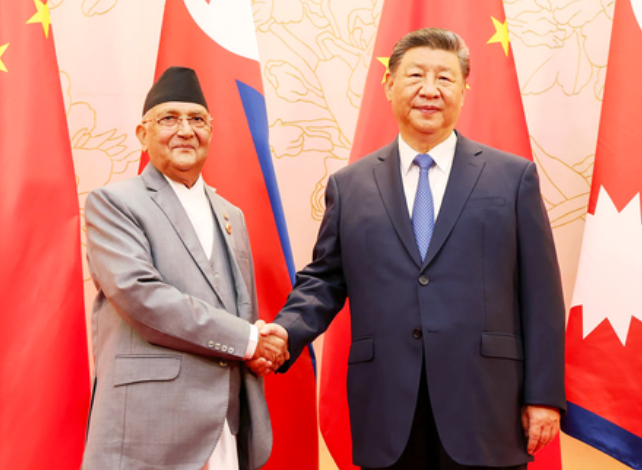

KATHMANDU — Nepal’s latest parliamentary election has upended the country’s political landscape, with the rise of the Rastriya Swatantra Party dealing a major setback to long-dominant leftist forces and raising questions about China’s influence in the country.
The Rastriya Swatantra Party, led by former media personality Rabi Lamichhane and key figure Balen Shah, emerged as the largest party in the 275-member House of Representatives, winning 182 seats and coming close to a two-thirds majority.
Traditional parties suffered heavy losses. The Nepali Congress secured 38 seats, while the Communist Party of Nepal (Unified Marxist-Leninist) won 25 and the Nepal Communist Party managed 17.
The results mark a sharp decline for communist groups that have played a central role in Nepal’s politics for decades and have historically maintained closer ties with Beijing.
Analysts say the outcome is unlikely to please China, which has often been seen as favoring leftist parties in Nepal. In the past, Beijing was linked to efforts to unify communist factions, including the 2018 merger that formed the Nepal Communist Party.
Despite the shift, China moved quickly to congratulate the Rastriya Swatantra Party following its victory, signaling its willingness to work with the new leadership and continue cooperation under initiatives such as the Belt and Road Initiative.
The election has also sparked debate over Nepal’s foreign policy direction. Critics of the Rastriya Swatantra Party had accused it of leaning toward U.S. interests, particularly after Balen Shah did not include a China-backed industrial project in his campaign platform.
Even so, analysts do not expect a dramatic shift in Nepal’s foreign policy. The country has long followed a policy of non-alignment, balancing relations with major powers including India and China.
The Rastriya Swatantra Party has pledged a balanced and pragmatic approach, including structured engagement with China on infrastructure, financing, and development.
While the decline of communist forces is significant, experts say it does not necessarily signal the end of leftist politics in Nepal, noting that new political formations could emerge to represent similar ideologies in the future. (Source: IANS)