Khaleda Zia’s Journey From Undivided India to the Helm of Bangladesh Politics
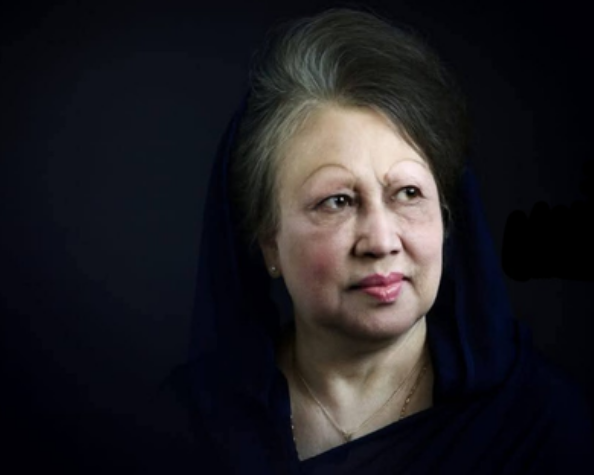

DHAKA, Bangladesh — Khaleda Zia’s life traced an extraordinary arc from her birth in undivided India to becoming Bangladesh’s first woman prime minister and one of the most dominant political figures in the country’s history, a role she held in various forms for more than four decades.
Zia, a three-time prime minister and longtime chairperson of the Bangladesh Nationalist Party, died early Tuesday after a prolonged illness. She was 80.
Born in 1945 in Jalpaiguri, then part of Greater Dinajpur in undivided India, Khaleda Zia moved with her family to what later became East Pakistan following the partition of India. She lived largely outside public life until her marriage in 1960 to Ziaur Rahman, then a captain in the Pakistani Army.
Ziaur Rahman emerged as a key figure during the 1971 Bangladesh Liberation War after rebelling against Pakistani forces. He later became president in 1977 and founded the Bangladesh Nationalist Party the following year. His assassination in May 1981 plunged the party into crisis, leading senior leaders to push Khaleda Zia into politics.
She formally entered party leadership in 1984, first as vice president and then as chairperson later that year. She would retain the post through multiple party councils, building a tenure of more than four decades at the head of the BNP.
After the BNP’s victory in the 1991 parliamentary elections, Khaleda Zia was sworn in as Bangladesh’s first female prime minister. She returned to office after the 1996 elections and again in 2001, marking three separate terms as head of government.
Her years in power coincided with some of the most strained periods in India–Bangladesh relations. Zia adopted a guarded and often confrontational approach toward New Delhi, opposing overland transit, connectivity initiatives, and several bilateral agreements. She argued that allowing Indian transit through Bangladesh threatened national sovereignty and, at times, used sharp rhetoric to underscore her position.
She also opposed renewing the 1972 Indo-Bangladesh Friendship Treaty, saying it limited Bangladesh’s independence, and frequently accused India of unfair practices related to water sharing from the Ganges, particularly concerning the Farakka Barrage. At various points, she alleged that Indian actions worsened flooding inside Bangladesh.
Relations deteriorated further in the early 2000s when her government pursued closer defense ties with China. India responded by accusing the BNP-led government of tolerating anti-India militant activity, claims that further strained bilateral ties. Cooperation on counterterrorism remained limited during this period.
Bangladesh’s political landscape for decades was defined by rivalry between two women — Khaleda Zia and Awami League leader Sheikh Hasina. After Hasina returned to power in 2009, Zia positioned herself as a champion of democratic resistance, leading protests against the government and facing repeated confrontations with authorities.
In 2011, she received international recognition when New Jersey’s State Senate honored her as a “Fighter for Democracy.” Her political fortunes later declined amid legal battles, including a corruption case that led to a prison sentence in 2018. She was temporarily released in 2020 on health grounds and fully freed in August 2024 through a presidential exemption.
Zia returned to Dhaka in May after several months of medical treatment in London. She had been hospitalized since November with serious heart and lung complications before her death.
She is survived by her elder son, BNP acting chairman Tarique Rahman, his wife Zubaida Rahman, and their daughter Zaima Rahman. Her younger son, Arafat Rahman Koko, died earlier in Malaysia. (Source: IANS)