Kashmiri Pandit Exodus Raised at UN Human Rights Council Session in Geneva

SRINAGAR, India — The decades-long displacement of Kashmiri Pandits was highlighted during the 61st session of the United Nations Human Rights Council in Geneva, drawing renewed attention to the community’s exodus from the Kashmir Valley in the early 1990s.
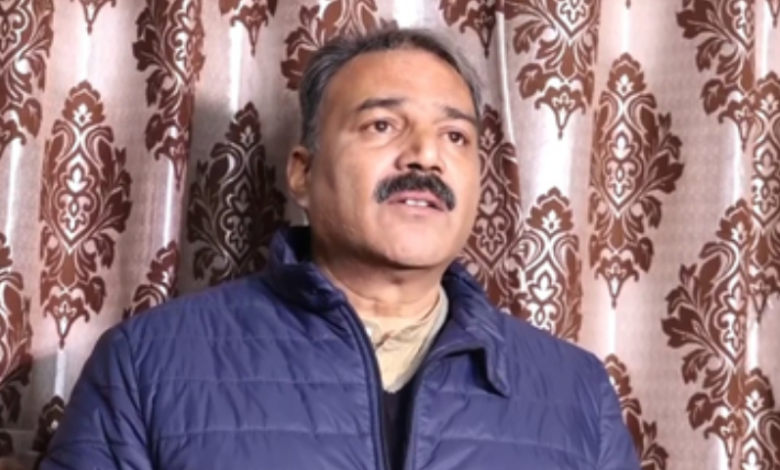
Satish Maldhar, chairman of the Jammu and Kashmir Peace Forum, an organization representing migrant Kashmiri Pandits, said the issue has returned to international focus after years of limited global attention.
“After more than three decades of silence, the tragic displacement of Kashmiri Pandits has once again entered the global spotlight. In a development that is stirring political and diplomatic debate, the issue has been formally raised during the 61st session of the United Nations Human Rights Council in Geneva,” Maldhar said Monday.
He said a written submission circulated by the Jammu and Kashmir Council for Human Rights has highlighted the plight of Kashmiri Pandits, an indigenous minority community that fled the Kashmir Valley during the unrest of the early 1990s.
The document emphasizes what it describes as the historic injustice of the displacement and reiterates the internationally recognized right of the community to return to their homes and ancestral lands with dignity and security.
Maldhar said the submission has also drawn attention to a community-led proposal aimed at facilitating the return of displaced families.
“The initiative proposes a structured plan for the return of nearly 419 displaced Kashmiri Pandit families across seven districts of Kashmir — Srinagar, Anantnag, Baramulla, Sopore, Budgam, Kupwara and Ganderbal,” he said.
Observers say the proposal represents a shift in the discussion surrounding the Kashmiri Pandit issue. Rather than advocating for isolated security settlements, the initiative calls for reintegrating the displaced community into the traditional social fabric of Kashmir and reviving what supporters describe as the Valley’s historic culture of coexistence and pluralism.
The exodus of Kashmiri Pandits remains one of the most painful and unresolved humanitarian issues linked to the region’s conflict. Thousands of families were forced to leave their homes, temples and long-standing cultural institutions, creating a lasting impact on Kashmir’s social and cultural landscape.
Political analysts say the inclusion of the issue in official documentation at the United Nations Human Rights Council could mark a turning point by bringing international attention to the displacement, which has largely been treated as a domestic issue.
Community leaders and diaspora groups welcomed the development, saying recognition of the Maldhar initiative at the United Nations reflects growing global awareness of the Kashmiri Pandit community’s calls for justice, property restitution and cultural revival.
Supporters also praised Maldhar’s efforts in outlining what they described as a constructive roadmap for a dignified return based on reconciliation, dialogue and community participation.
“For many displaced families, who have spent over three decades in exile, the moment carries deep symbolic weight. The acknowledgment of their cause at the United Nations signals that the story of their displacement long overshadowed by geopolitics — has once again returned to the conscience of the international community,” the statement said.
Maldhar said that if momentum continues to grow around the proposal, it could provide a framework for restoring minority rights, rebuilding trust among communities and reviving Kashmir’s pluralistic heritage. (Source: IANS)