Indian-American Voters Draw Attention in Texas and New York Midterm Races

Washington — Indian-American voters are drawing increased attention in key congressional races in Texas and New York as early voting gets underway ahead of the November 3 midterm elections, with immigration policies, racial identity and political representation emerging as prominent issues.
In Texas, a social media post by an Indian-American voter expressing support for Democratic U.S. Senate candidate James Talarico attracted widespread attention after the author criticized what he described as growing xenophobia and racial resentment.
The post, published Monday by an X account using the name Vasant Bhatt, received approximately 857,000 views, 7,300 likes and 3,000 replies within seven hours.
“I just cast my ballot for James Talarico. As a second-generation Indian American, I am thoroughly disgusted by the xenophobia, racial resentment, and increasingly brazen attacks on my identity,” the post stated.
The author emphasized his family’s contributions to American society and rejected the suggestion that Americans of Indian descent should be treated as outsiders.
“My family has contributed to the American story through hard work, sacrifice, and an unwavering belief in the opportunities this nation promises. I am every bit as American as anyone else, and I will not tolerate being treated as a perpetual foreigner in the country I call home,” he wrote.
The post also encouraged Texans to participate in the election, describing the vote as a decision about the state’s future and fundamental political values.
The remarks prompted criticism from conservative social media users, including commentator Patrick Casey, who pointed to the author’s reported past internship with Republican Sen. Ted Cruz. Casey’s response attracted approximately 32,000 views.
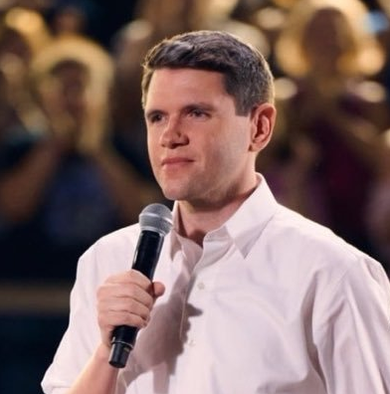
Talarico, the Democratic nominee for the U.S. Senate in Texas, is competing in a state with one of the nation’s largest Indian-American populations, particularly in the Dallas-Fort Worth and Houston metropolitan areas.
The online debate reflects broader political tensions surrounding immigration, H-1B visas and the treatment of immigrant communities, issues that have become increasingly prominent in several congressional contests.
Although Indian-American voters have historically favored Democratic candidates, both major political parties have intensified efforts to reach the community.
In New York, more than 500 Indian Americans gathered in Uniondale to support the reelection campaign of Democratic Rep. Tom Suozzi, who represents the state’s 3rd Congressional District on Long Island.
The district includes a substantial Indian-American population, making community engagement an important element of local political campaigning.
During the gathering, Indian-American community leader Varinder Bhalla compared Suozzi to former Rep. Stephen Solarz, who was known for advocating stronger relations between the United States and India during his congressional career.
The event highlighted the role of Indian-American organizations and community leaders in mobilizing voters and building relationships with elected officials.
Recent polling also points to continued Democratic support among Indian-American voters.
The 2026 Asian American and Pacific Islander Voter Survey found that Indian-American respondents favored Democratic Senate candidates over Republicans by 66% to 18%, although the survey’s relatively small Indian-American sample limits the precision of those findings.
Early voting is underway in Texas, where campaigns are closely monitoring turnout in suburban communities that could influence closely contested races.
Both parties have expanded outreach to Asian-American voters, including campaign communications in Hindi, Gujarati and Telugu, as they seek support from one of the fastest-growing segments of the eligible U.S. electorate.
The increased political activity comes ahead of midterm elections that will determine control of Congress, with Indian-American voters expected to remain an important constituency in several competitive suburban districts. (Source: IANS)