Indian American leaders condemn Trump remarks as harmful to U.S.-India ties

WASHINGTON — Indian American lawmakers and community leaders have strongly condemned remarks by President Donald Trump targeting Indian immigrants and India, calling them offensive, divisive, and damaging to bilateral relations.
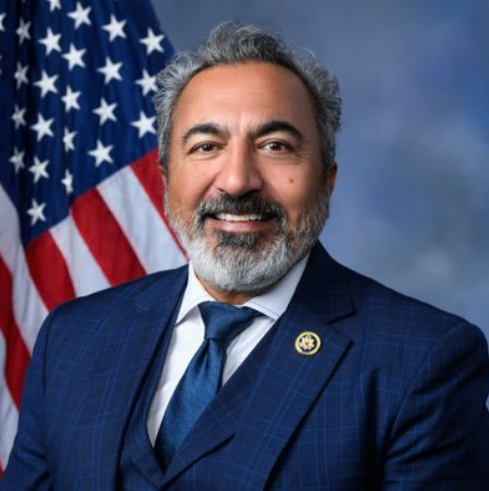
Congressman Ami Bera, the longest-serving Indian American member of Congress, said he was proud of his heritage and of the United States.
“As the son of immigrants from India, I take great pride in both my heritage and in the country that gave my family the opportunity to build a better life,” he said.
“My parents came to the United States legally in search of that opportunity. My mother spent 35 years working as a public school teacher. My father worked as an engineer. They raised my brothers and me with a deep belief in hard work, public service, and giving back to the country that welcomed them,” Bera said.
Calling himself “a product of that American story,” he added: “I attended California’s public schools from kindergarten through medical school, became a doctor, and now have the privilege of serving our nation in Congress. That is what the American Dream looks like.”
Bera described Trump’s comments as “offensive, ignorant, and beneath the dignity of the office he holds,” saying they reflect “a fundamental misunderstanding of who we are as a nation.”
“America has always been strengthened by generations of immigrants who come here, work hard, and contribute to our country. They do not weaken America — they strengthen it,” he said.
Congressman Raja Krishnamoorthi also criticized Trump for amplifying what he called a “racist rant.”
“Donald Trump’s decision to amplify a racist rant attacking India and immigrants is disgraceful and beneath the office he holds,” he said.
“His rhetoric doesn’t just insult millions of Indian Americans and one of our most important global partners — it undermines the values that have made America a nation of opportunity and innovation,” Krishnamoorthi added. “We should be strengthening that partnership and honoring our diversity, not stoking division for political gain.”
Ajay Bhutoria, a former adviser to a presidential commission on Asian Americans, Native Hawaiians, and Pacific Islanders, called for an immediate withdrawal of the remarks.
“The rhetoric coming from the Oval Office describing India as a ‘hellhole’ and our professional community as ‘gangsters with laptops’ is a dangerous and offensive distortion of reality,” he said.
Bhutoria argued that Indian Americans play a central role in the U.S. economy.
“Managers with laptops create jobs, fuel innovation, and contribute to massive economic growth. They are infinitely better for the future of this country than gangsters with guns who promote violence and instability,” he said.
He added that while Indian Americans make up about 1.5 percent of the U.S. population, they contribute nearly 6 percent of U.S. income taxes.
“Our ‘laptop warriors’ are the CEOs of Alphabet, Microsoft, and Adobe, and the entrepreneurs who have founded over 10% of America’s unicorn startups,” he said.
Bhutoria also highlighted the broader strategic implications.
“India is a critical strategic ally… Attacking this diaspora is not just a social mistake; it is an economic and geopolitical blunder,” he said.
The backlash reflects growing concern among Indian Americans over rhetoric seen as targeting immigrants and undermining a key bilateral partnership. Lawmakers and community leaders have framed the issue as one involving both dignity and broader economic and strategic consequences.
The Indian American community is among the most affluent and highly educated groups in the United States, with a strong presence in technology, healthcare, and academia. Nearly one in ten doctors in the U.S. is of Indian origin, and the community plays a major role in innovation and entrepreneurship.
U.S.-India ties have deepened over the past two decades, driven by cooperation in defense, technology, and trade. Bilateral trade has crossed $200 billion, and both countries increasingly view each other as key partners in addressing global challenges. (Source: IANS)