Indian American Harmeet Dhillon Resigns as Justice Department Civil Rights Chief, Denies Election Connection
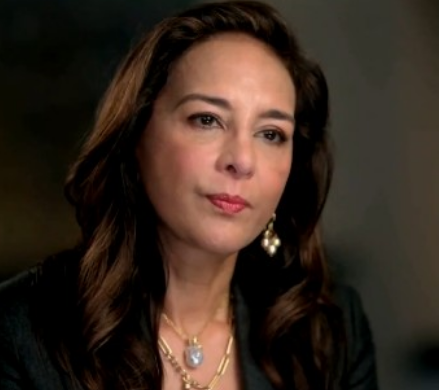

WASHINGTON–Indian American attorney Harmeet Dhillon has resigned as head of the U.S. Justice Department’s Civil Rights Division, saying her decision to leave the Trump administration was made weeks before the midterm elections and was not connected to the Republican Party’s electoral setbacks.
Attorney General Todd Blanche confirmed Thursday that he had accepted Dhillon’s resignation, bringing an end to her tenure as Assistant Attorney General for Civil Rights.
Dhillon, who was born in Chandigarh, India, said she voluntarily decided to step down three weeks earlier but agreed to postpone her departure at the request of White House Chief of Staff Susie Wiles.
“I wasn’t asked to resign,” Dhillon told Fox News Digital. “I resigned three weeks ago, and Susie asked me to please wait until after the midterms.”
According to Fox News Digital, Dhillon formally submitted her resignation on November 5, two days after the midterm elections.
The former civil rights chief said she planned to return to private legal practice and believed she had accomplished the objectives she set out to achieve when joining the administration.
In a statement posted on X, Dhillon expressed gratitude to President Donald Trump and defended her record at the Justice Department.
“Serving my country as AAG for Civil Rights has been the honor of a lifetime,” she wrote.
“We ushered in the downfall of illegal DEI, we fought to protect women and girls’ sports, and so much more.”
DEI refers to diversity, equity and inclusion programs, which have faced increased scrutiny and legal challenges under the Trump administration.
“I want to thank President Trump for giving me this opportunity. I look forward to what’s next!” Dhillon added.
Blanche praised Dhillon’s leadership and public service while announcing his acceptance of her resignation.
“She has defended the civil liberties of every American and enforced the law without fear or favor,” Blanche wrote on X.
“The Department is grateful for her dedicated public service, and we wish her every success in her future endeavors.”
Dhillon’s departure drew sharply contrasting reactions from political leaders and former Justice Department officials.
Democratic National Committee Chair Ken Martin criticized her tenure, accusing her of using the Civil Rights Division to advance Trump’s political interests rather than safeguard the rights of Americans.
Martin also linked her departure to the Republican Party’s losses in the midterm elections, an interpretation Dhillon has rejected.
Stacey Young, president of Justice Connection, an organization representing former Justice Department employees, also criticized Dhillon’s leadership.
According to The Hill, Young accused Dhillon of moving the division away from its traditional civil rights enforcement responsibilities.
Her criticism focused on the termination of police reform investigations and agreements, as well as the division’s handling of matters involving universities and election officials.
Dhillon and Blanche have maintained that her leadership prioritized enforcing federal law and protecting constitutional rights.
Her critics, however, argued that the division’s priorities had shifted away from protecting vulnerable communities and addressing systemic discrimination.
Dhillon’s resignation concludes a relatively brief but politically contentious period leading one of the Justice Department’s most prominent divisions.
Born in Chandigarh, Dhillon spent part of her childhood in London before her family immigrated to the United States.
The family initially settled in the Bronx, New York, before moving to North Carolina.
Dhillon graduated from Dartmouth College and earned her law degree from the University of Virginia School of Law.
Before joining the Trump administration, she established the Dhillon Law Group and founded the Center for American Liberty, a legal advocacy organization focused on constitutional rights and civil liberties.
She also became a prominent conservative attorney through her involvement in election-related litigation, free speech cases and Republican political activities.
Trump nominated Dhillon to lead the Justice Department’s Civil Rights Division in December 2024.
The U.S. Senate confirmed her appointment on April 3, 2025, and she was sworn into office on April 7.
Her departure comes as the administration faces renewed political pressure following the midterm elections, although Dhillon has emphasized that her decision was personal and made well before voters went to the polls. (Source: IANS)