India Warns Pakistan at UN: Will Counter Terrorism “With All Its Might”
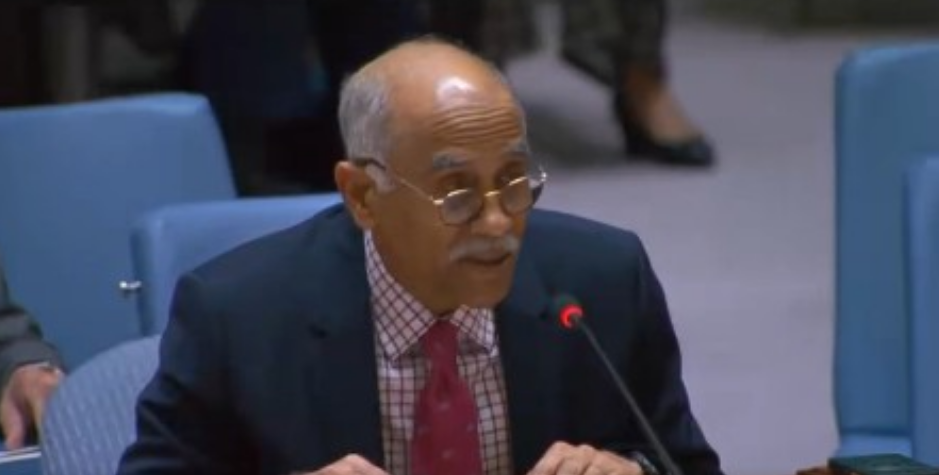

UNITED NATIONS — India delivered a sharp warning to Pakistan at the United Nations on Monday, saying it will not tolerate terrorism sponsored by Islamabad and will respond “with all its might,” as tensions flared during a Security Council open debate.
Speaking at the UN Security Council’s open debate on “Leadership for Peace,” India’s Permanent Representative P. Harish accused Pakistan of using the forum to advance what he called a divisive agenda and evade accountability for terrorism.
“Let me be clear: India will counter Pakistan-sponsored terrorism in all its forms and manifestations with all its might,” Harish said.
His remarks came after Pakistan’s UN envoy, Asim Iftikhar Ahmad, raised the Indus Waters Treaty during the debate. Harish said India had placed the treaty in abeyance because Pakistan remains “a global epicenter of terror” and has failed to credibly and irrevocably end its support for cross-border terrorism.
“India entered into the Indus Waters Treaty 65 years ago in good faith, in a spirit of goodwill and friendship,” Harish said. “Over these six and a half decades, Pakistan has violated the spirit of the treaty by waging three wars and carrying out thousands of terror attacks against India.”
Harish cited the April terror attack in Pahalgam as the most recent example, alleging that Pakistan-backed militants carried out religion-based killings that left 26 civilians dead. He said the attack, which targeted Hindus and a Christian, prompted Prime Minister Narendra Modi to suspend the 1960 treaty.
The Indian envoy also criticized Pakistan for repeatedly raising issues unrelated to Security Council agenda items, including Jammu and Kashmir.
“Pakistan’s unwarranted reference to Jammu and Kashmir in today’s open debate reflects its obsessive focus on harming India and its people,” Harish said. “A non-permanent member of the Security Council that pursues such an agenda across UN platforms cannot be expected to meet its responsibilities and obligations.”
Harish further questioned Pakistan’s commitment to democracy, pointing to its recent 27th Constitutional Amendment, which he said entrenches military dominance over civilian institutions.
“Pakistan has a unique way of respecting the will of its people — by jailing a prime minister, banning the ruling political party, and allowing its armed forces to engineer a constitutional coup,” he said.
Former Prime Minister Imran Khan remains imprisoned, and his party, Pakistan Tehreek-e-Insaf, has been banned. The constitutional amendment, adopted last month, grants Field Marshal Asim Munir the newly created post of Chief of Defence Forces with lifetime immunity from prosecution and a guaranteed term through 2030, according to Indian officials.
While responding to Pakistan’s statements, Harish said his broader focus was on the failure of global leadership, particularly within the Security Council, to effectively maintain international peace and security.
“The quality and focus of leadership displayed by members of the Council is the most important factor affecting international peace and security,” he said, calling Security Council reform an “urgent global imperative.”
Harish criticized the Intergovernmental Negotiations process on UN reform as unproductive and urged a shift to time-bound, text-based negotiations. He said reforms must expand representation for underrepresented regions, including the Global South, in both permanent and elected categories.
He also called for greater transparency in the selection of the next UN secretary-general, whose term will begin after Antonio Guterres leaves office at the end of next year.
“The new secretary-general must embody the aspirations of the overwhelming majority of humanity, who live in developing countries,” Harish said, adding that leadership within the UN must be inclusive, representative, and effective. (Source: IANS)