India Signals Strategic Autonomy as Putin Visit Pushes Back on Western Pressure
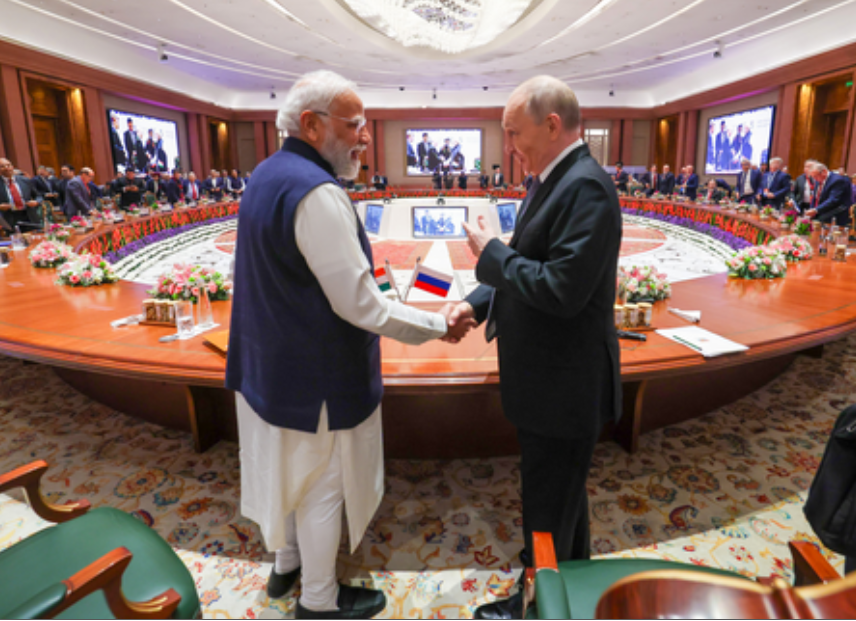

Moscow/New Delhi— Russian President Vladimir Putin’s state visit to India this week has reinforced New Delhi’s message that it will not allow Western pressure to dictate its strategic choices, according to a detailed analysis published on Saturday.
The report, released by One World Outlook, said the visit underscored that India has no intention of diluting its long-standing partnership with Russia to satisfy the geopolitical preferences of the United States or its allies.
Putin’s trip — marked by full state honours, ceremonial events at Rajghat and Rashtrapati Bhavan, and extensive delegation-level discussions — came at a time when India faces three simultaneous pressures: Western sanctions on Russia, intensifying U.S.–China competition in the Indo-Pacific, and a still-developing India–U.S. trade and technology framework.
“By choosing to host Putin with full ceremonial honours… India signalled that Russia remains a first-tier partner, not an embarrassing legacy relationship to be quietly retired under Western pressure,” the report stated.
The analysis said India’s public display of diplomatic warmth undercuts assumptions in Western capitals that New Delhi will eventually align with U.S. sanctions or adopt a more subordinate strategic posture. Instead, it argued, India is projecting a model of cooperation with Washington that still preserves room for independent engagement with Russia and the Global South.
On defence, the report noted that summit communiqués make clear that New Delhi will not weaken its military partnership with Moscow. India continues to rely on Russia for major platforms, including S-400 air defence systems crucial to its deterrence posture. The 2025 agenda, it said, points toward deeper co-development in areas such as engines, hypersonic technology, unmanned systems, manufacturing, and maintenance hubs.
In the energy sector, Putin assured Indian leaders that Russia would remain an “uninterrupted” supplier of discounted crude and fuel products, insulating bilateral energy ties from geopolitical volatility.
The report argued that Washington should view India’s Russia relationship not as a test of loyalty but as part of a broader hedging strategy designed to avoid dependence on any single global power.
“Pushing India to sever the Russian leg of this triangle will not make it fall into America’s arms; it risks nudging New Delhi back toward a more traditional non-alignment,” it noted, suggesting such pressure could ultimately weaken U.S. influence in the region. (Source: IANS)