
India Advises Nationals in Iran Not to Approach Land Borders Without Embassy Coordination
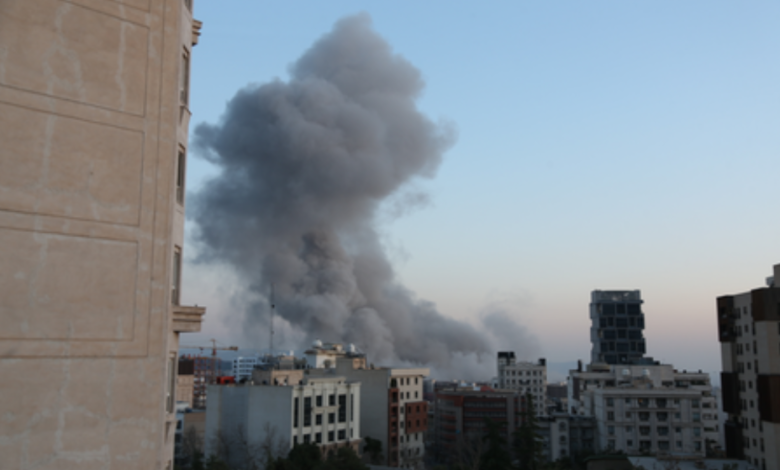

Tehran— The Embassy of India in Tehran on Monday issued an advisory urging Indian nationals in Iran not to travel to any land border crossings without prior coordination with the mission, citing the ongoing security situation in West Asia.
In a statement posted on the social media platform X, the embassy said Indian citizens should avoid attempting to leave Iran through land borders unless they first obtain explicit guidance from the diplomatic mission.
“Indian nationals are hereby advised not to approach any of the land borders of Iran for travel outside the country without prior coordination with the Embassy. Any movement towards land border points should be undertaken only after obtaining explicit guidance from the Embassy,” the advisory stated.
The embassy also cautioned that it would not be able to assist individuals who leave Iranian territory but are subsequently unable to enter another country.
“It may please be noted that the Embassy will not be in a position to extend assistance once individuals have exited Iranian territory and are unable to enter the third country concerned,” the statement added.
Indian nationals in Iran were encouraged to stay in touch with the embassy through emergency helplines or email if they require assistance.
The advisory comes amid rising tensions in West Asia following the 2026 US–Israel strikes on Iran, which triggered a series of retaliatory actions by Tehran. Iran has launched drone and missile attacks targeting United States assets, regional capitals, and allied forces across the region.
Responding to criticism over these strikes, Esmaeil Baqaei, spokesperson for the Iranian Ministry of Foreign Affairs, defended Tehran’s actions as defensive in nature.
In a post on X, Baqaei said missiles had been launched at Iran from neighbouring countries and claimed that U.S. fighter jets had used nearby airspace to conduct attacks.
“To those who insist on ignoring the underlying justifications behind our defensive strikes against U.S. military bases and assets in the region: Missiles are launched at Iran from the territories of neighbouring countries… while U.S. fighter jets use the airspace of neighbouring countries to attack Iran,” he wrote.
Iran’s actions have drawn criticism from several countries in West Asia, which have described the strikes as an escalation and a threat to regional stability.
On Monday, Saudi Arabia condemned what it described as Iranian attacks against the Kingdom and members of the Gulf Cooperation Council (GCC), reaffirming its right to take necessary measures to safeguard national security and protect its citizens.
In a statement posted by the Saudi Ministry of Foreign Affairs on X, the Kingdom said the targeting of civilian infrastructure — including airports and oil facilities — demonstrated “a determination to threaten security and stability and to persist in blatantly violating international charters and international law.”
The ministry added that the continued attacks represent a further escalation with potentially significant consequences for regional relations and stability.
Saudi Arabia also rejected Iranian allegations that its territory had been used to support military operations against Iran, stating that aircraft operating from the Kingdom were conducting routine air patrols to monitor and protect the airspace of GCC states from missile and drone threats.
The Kingdom warned that Iran’s current actions risk widening the conflict and could have serious implications for bilateral relations in the future.