
Government Identifies 110 Railway Stretches for Wildlife Safety Measures
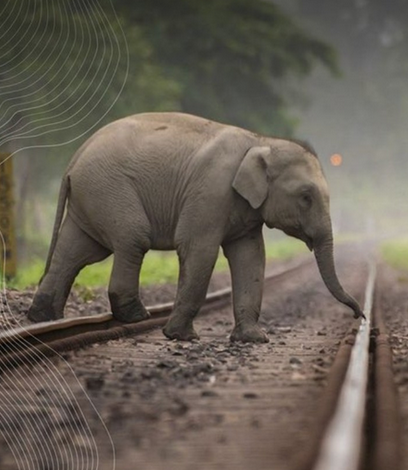

NEW DELHI — The Union Environment Ministry, working with the Ministry of Railways, has identified 110 railway stretches across elephant habitats and additional routes in tiger landscapes where infrastructure changes are needed to reduce wildlife deaths on railway tracks.
Officials said a total of 705 mitigation structures have been recommended to enable safer animal crossings and reduce collisions between trains and wildlife.
The details were shared during a two-day national workshop titled “Policy Implementation for Minimising Elephant Mortalities on Railway Tracks,” held at the Wildlife Institute of India in Dehradun.
According to officials, the mitigation plan includes a range of infrastructure improvements such as ramps, bridge extensions, fencing and dedicated wildlife crossings.
The proposed measures include 503 ramps and level crossings, 72 bridge extensions or modifications, 39 fencing or trenching structures, four exit ramps, 65 new underpasses and 22 overpasses designed to help animals safely cross railway lines.
“Based on a detailed assessment of 127 railway stretches covering 3,452.4 km, 77 stretches spanning 1,965.2 km across 14 states were prioritised for mitigation, considering wildlife movement patterns and the risk of animal mortality,” an official said.
The proposals were developed after joint field surveys conducted by teams from Project Elephant, the Wildlife Institute of India, state forest departments and Indian Railways. The surveys examined ecological conditions at each location and recommended site-specific mitigation strategies.
The workshop was organized March 10–11 by the Information Project Elephant Division of the Ministry of Environment, Forest and Climate Change in collaboration with the Wildlife Institute of India.
About 40 participants attended the event, including representatives from the environment ministry, the railways ministry, forest departments from elephant-range states and conservation scientists.
Railway zones represented included East Central Railway, East Coast Railway, North Eastern Railway, North East Frontier Railway, Northern Railway, South Eastern Railway, Southern Railway and South Western Railway.
Technical sessions during the workshop focused on elephant ecology, infrastructure planning and biodiversity conservation, highlighting the need for coordinated planning where railway tracks intersect wildlife corridors.
Participants also reviewed state-level data and case studies to better understand the factors contributing to wildlife collisions, including habitat fragmentation, land-use changes, train speeds, night operations and seasonal elephant migration patterns.
Regional working groups evaluated mitigation strategies across major wildlife landscapes including the Shivalik-Gangetic plains, Central India and the Eastern Ghats, North-East India and the Western Ghats.
Experts also discussed best practices such as early-warning systems, sensor- and AI-based wildlife detection technologies, GIS monitoring and community-based alert and patrol networks aimed at reducing accidents involving animals on railway tracks. (Source: IANS)