Foreign Policy Expert Says Iran Unlikely to Yield to U.S. Pressure


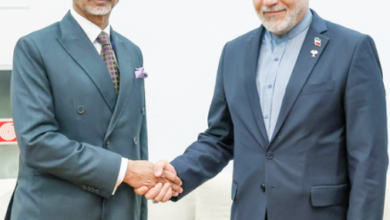
NEW DELHI — Foreign affairs expert K.P. Fabian said Iran is unlikely to surrender to U.S. threats, warning that Washington’s strategy of public pressure and escalation may be fundamentally flawed.
Speaking amid rising tensions between the U.S. and Iran, Fabian pointed to what he described as a pattern in U.S. policy under President Donald Trump, centered on issuing threats and deadlines.
“The purpose is quite obvious. President Trump believes that the rest of the world can be threatened, whether it is Greenland or tariffs. However, in the case of Greenland, he learned, albeit late, that threats do not always work. Similarly, with tariffs, he is gradually learning the same lesson, as seen when the Supreme Court ruled that he was exceeding his powers,” Fabian said.
He added that while alternative legal mechanisms for tariffs exist, the broader strategy remains rooted in pressure tactics.
Fabian argued that such an approach is unlikely to succeed with Iran, describing it as a “civilization state” with deep historical roots and resilience.
“What must be understood, however, is that Iran cannot be easily threatened. Iran is what one might call a ‘civilization state.’ If you consider the legacy of the Persian Empire and look at its geography, it is not just a typical nation-state,” he said.
“President Trump seems to believe that by eliminating a number of top leaders, Iran will surrender. This assumption has proven incorrect. Leadership can be replaced, you can eliminate individuals, but you cannot eliminate an ideology,” he added.
Fabian suggested Iran could take a more strategic approach, particularly regarding the Strait of Hormuz, a critical global shipping route.
“For instance, Iran could state that there was free passage before February 28, when the aggression began. If the aggression stops and assurances are given that it will not resume, then the Strait of Hormuz will remain open for free passage. Naturally, Iran might impose a fee to cover the costs of maintaining security, especially given the threat of American and Israeli attacks,” he said.
He noted that Iran may be working with regional partners such as Oman on a framework, but said a clear public position has yet to emerge.
Fabian also criticized U.S. decision-making, suggesting the administration may have underestimated the conflict and relied too heavily on external assessments.
“How many times has President Trump told the whole world that he has painted himself into a corner? This is the opinion of Time magazine, The New York Times, and many others. Let’s look at the bigger picture. Trump joined a war that was started by Netanyahu. According to eminent scholars like Professor John Mearsheimer of the University of Chicago, he has walked into a war he cannot win,” he said.
He added that Trump may have acted against the advice of intelligence officials and the military.
“If he believed that Iran would surrender on day one or day two, it appears that Mossad made that assessment and passed it on to Trump through Netanyahu. Trump, going against the advice of his Intelligence officials, such as Tulsi Gabbard, and the military at the Pentagon, seems to have accepted Netanyahu’s position. As a result, he is now in a difficult situation,” Fabian said.
He also warned about the risks of concentrated power in the hands of leaders prone to volatile decision-making.
Fabian’s comments underscore the complexity of the U.S.-Iran standoff and raise questions about the effectiveness of threat-based foreign policy strategies. (Source: IANS)