Air Pollution Cutting Life Expectancy, Productivity, and Quality of Life in Delhi, Experts Warn

NEW DELHI– Air pollution in the national capital has moved beyond being an environmental issue and is now steadily shortening life expectancy, reducing productivity, and eroding quality of life, health experts warned on Thursday as Delhi continues to grapple with deteriorating air quality for more than a month.
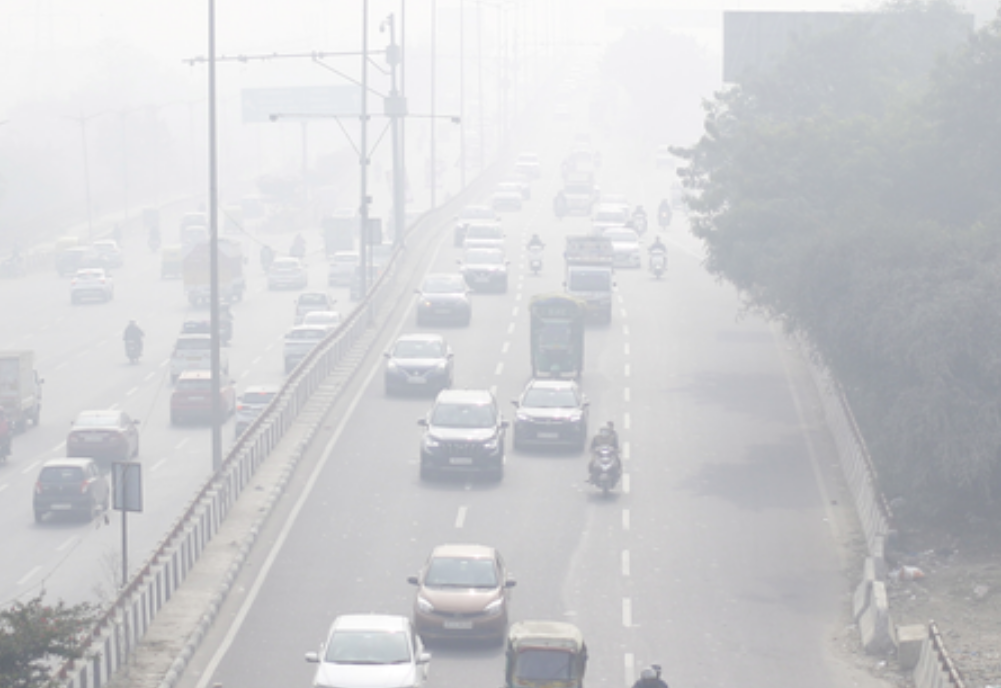
Visuals from across Delhi and the National Capital Region showed sharply reduced visibility, with dense smog blanketing roads, residential neighborhoods, and public spaces, disrupting daily movement and heightening health concerns. According to data from the Central Pollution Control Board, Delhi recorded an Air Quality Index of 356, placing it firmly in the “very poor” category.
Experts said prolonged exposure to polluted air is undermining India’s economic growth while driving a rise in serious health conditions, including stroke, cardiovascular disease, respiratory illnesses, and neurological disorders. The growing disease burden is placing increasing strain on healthcare systems and weakening the country’s long-term development potential.
“Prolonged exposure does not just shorten life expectancy; it increases the number of years lived with disability,” said Rajesh Bhushan, former secretary in the Ministry of Health and Family Welfare. “In highly polluted cities, people may survive longer but with chronic illness that reduces productivity, quality of life, and economic contribution.”
Bhushan said tackling air pollution requires coordinated action across healthcare systems, urban planning, and public awareness, with a stronger emphasis on preventive and primary healthcare. He was speaking at an event organized by the Illness to Wellness Foundation.
Delhi-based pulmonologist Dr. G. C. Khilnani described air pollution as a “man-made public health emergency” with far-reaching consequences for respiratory and cardiovascular health.
“The most dangerous effects of air pollution are often invisible,” Khilnani said. “Ultra-fine particles penetrate deep into the lungs, enter the bloodstream, and damage multiple organs without early warning signs.”
Neurologist Dr. Daljit Singh said air pollution disrupts blood circulation in the brain and significantly raises the risk of both ischemic and hemorrhagic strokes.
“We are now observing clear seasonal spikes in stroke admissions during high-pollution months, indicating that pollution is emerging as an independent risk factor,” Singh said. “Beyond stroke, air pollution is also associated with neurological conditions such as Alzheimer’s disease, dementia, and Parkinson’s disease, making this a growing neurological challenge that must be urgently addressed.”
Dr. Harsh Mahajan, mentor for the FICCI Health Sector, said air pollution has become a silent risk factor aggravating nearly every category of disease.
“It disproportionately affects the poor, children, and outdoor workers, even though they contribute the least to the problem,” Mahajan said. “The dangerous myth is that technology alone will solve this crisis. What we lack is urgency and accountability.”
The experts emphasized that only sustained commitment, strong enforcement of pollution controls, and informed public participation can help secure healthier lives and a more resilient economy. (Source: IANS)