Former Congressman and India Caucus Co-Chair Jim McDermott Dies at 89
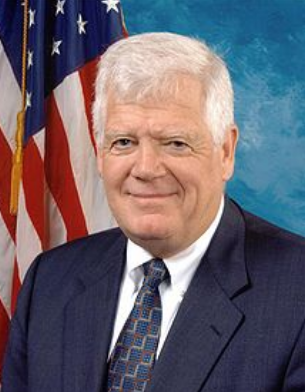

WASHINGTON–Former U.S. Congressman Jim McDermott, a longtime supporter of stronger U.S.-India relations who helped lead the Congressional India Caucus and advocated for the Indian American community, has died at the age of 89.
McDermott, a Democrat who represented Washington state’s Seattle-based 7th Congressional District for 28 years, died Thursday night at Harborview Medical Center in Seattle.
A psychiatrist by training, McDermott served 14 terms in the House of Representatives from 1989 until his retirement in 2017. He was succeeded by Indian American Congresswoman Pramila Jayapal.
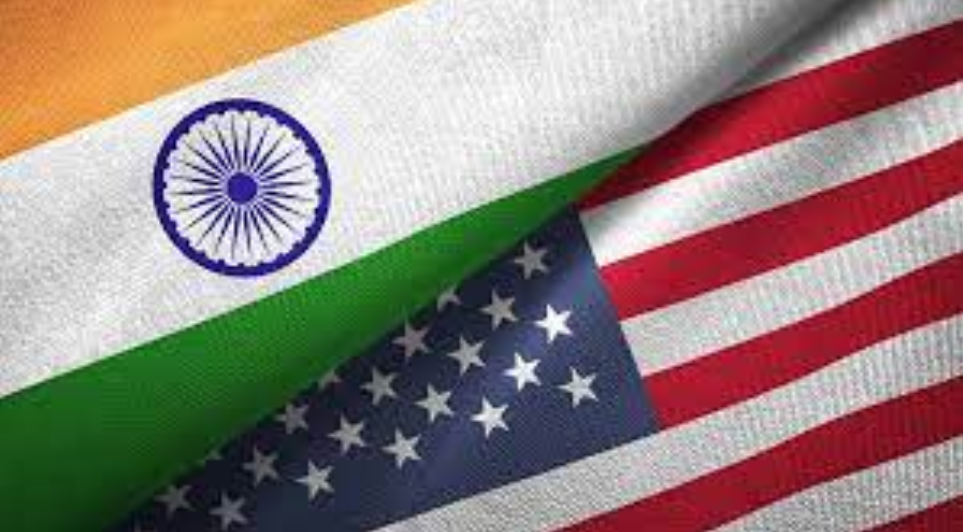
Throughout his congressional career, McDermott played a significant role in strengthening ties between Washington and New Delhi, supporting efforts to remove nuclear-related sanctions, condemning terrorist attacks in India and promoting cooperation between the two countries.
In April 2001, he joined Republican Congressman Ed Royce in introducing legislation to lift sanctions imposed on India and Pakistan following their nuclear weapons tests in 1998.
McDermott also expressed solidarity with India following the deadly Mumbai train bombings on July 11, 2006.
Addressing the House of Representatives that day, he offered condolences to then-Prime Minister Manmohan Singh and the Indian people.
“India is a great nation, and the noble spirit of its people will overcome today’s heartbreak,” he said.
He concluded his remarks with a message of support: “India, we stand with you.”
McDermott served as Democratic Co-Chair of the Congressional India Caucus from 2000 to 2002 and returned to its leadership in 2007. Congressman Joe Crowley succeeded him in December 2010.
Despite his longstanding support for closer bilateral relations, McDermott opposed the landmark U.S.-India civil nuclear agreement negotiated during the administration of President George W. Bush.
He voted against legislation facilitating the agreement in July 2006 and again opposed the measure approving the nuclear cooperation deal in September 2008. Both bills passed Congress.
McDermott argued that India should commit to ending the production of fissile material used in nuclear weapons before the agreement could move forward.
“In the absence of an Indian commitment to end fissile material production, I cannot support moving forward at this time with this agreement,” he said in remarks entered into the Congressional Record in July 2006.
He emphasized, however, that his opposition to the nuclear deal should not be interpreted as hostility toward India or its people, maintaining that cooperation could continue in other areas.
In a January 2007 interview with India Abroad, McDermott described his opposition as partly a protest against the Bush administration rather than a rejection of India.
His commitment to the bilateral relationship continued despite those disagreements.
In November 2009, McDermott sponsored a congressional resolution welcoming Prime Minister Manmohan Singh to the United States.
The resolution recognized expanding cooperation between the two democracies in defense, trade, technology, science and healthcare. It also acknowledged the contributions of Indian Americans to American society.
McDermott maintained relationships with Indian political leaders even after leaving Congress.
Indian lawmaker Milind Deora, a member of the Rajya Sabha, remembered him on X as a longtime family friend and a “steadfast friend of India”.
Jayapal, who succeeded McDermott in Congress, also paid tribute to his advocacy for immigrants and minority communities, particularly during periods of heightened discrimination.
She recalled how McDermott helped organize a gathering in Seattle to oppose hate and discrimination following the September 11, 2001, terrorist attacks.
Jayapal said she had approached him with concerns about growing hostility toward Arab, Muslim and South Asian communities, and he responded by helping bring people together.
“He was always willing to stand up with us — even before it was popular — for immigrant justice,” she said.
Born in Chicago in 1936, McDermott served as a psychiatrist in the U.S. Navy before beginning his political career.
Before his election to Congress, he spent 16 years in the Washington state legislature, where he helped develop the state’s Basic Health Plan, an initiative designed to provide health insurance coverage to residents who could not afford it.
His nearly three decades in Congress were marked by advocacy for healthcare access, immigrant rights and international cooperation, including his efforts to build stronger ties between the United States and India. (Source: IANS)