India Urged to Strengthen Ties With Trump and Democratic Leaders Following U.S. Midterm Elections
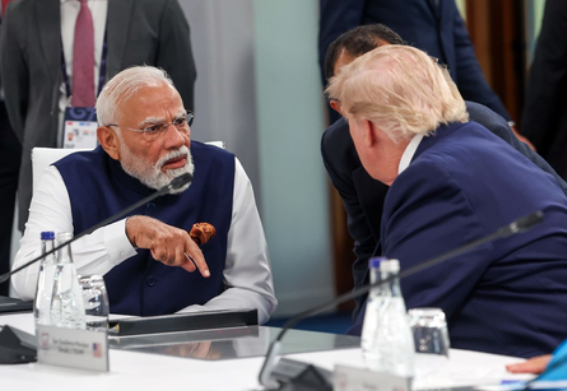
NEW DELHI–India should maintain close diplomatic ties with President Donald Trump while expanding its engagement with Democratic leaders in Congress following the party’s victory in the 2026 U.S. midterm elections, according to a report by former Indian diplomat Sanjay Kumar Verma.
The Democratic Party’s capture of both the House of Representatives and the Senate has created a new political environment in Washington, potentially complicating Trump’s final two years in office and requiring India to navigate competing priorities between the White House and Capitol Hill.
Writing for India Narrative, Verma argued that New Delhi must avoid becoming entangled in partisan disputes while preserving bipartisan support for the U.S.-India strategic partnership.
“The Democratic victory in the 2026 US midterm elections will complicate President Donald Trump’s final two years in office. For India, the challenge is to sustain a productive relationship with the White House while strengthening its political constituency in a Congress now controlled by Democrats,” Verma wrote.
He described the election results as a significant political setback for Trump but cautioned against interpreting them as a complete rejection of the president’s domestic and foreign policy agenda.
“The Democrats have captured both the House of Representatives and the Senate, ending Republican control of Congress. For Trump, this is a substantial setback. It would, however, be premature to interpret the result as a wholesale rejection of his political philosophy or of every objective he has pursued in foreign policy,” he added.
Verma noted that Trump would retain substantial authority over foreign relations and national security despite Democratic control of Congress. As a result, India would need to pursue a diplomatic strategy that maintains strong relationships with both branches of government.
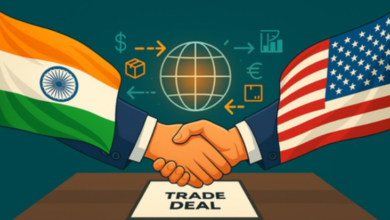
He identified defense cooperation, energy security, emerging technologies, manufacturing and global supply chain diversification as areas where India and the Trump administration share strategic interests.
“New Delhi should continue to engage Trump and his administration directly. There is considerable common ground in defence cooperation, energy security, technology, manufacturing and the restructuring of global supply chains. Differences over tariffs, market access and immigration will need patient negotiation. There is little to be gained from public confrontation, just as India should avoid giving the impression that it is distancing itself from the administration because of the Republican electoral setback,” Verma mentioned.
At the same time, he emphasized that Democratic control of Congress would make engagement with lawmakers increasingly important, particularly on issues involving trade, immigration, technology and foreign policy.
Verma recommended that Indian diplomats prioritize relationships with congressional leaders, members of key committees and influential lawmakers from both political parties.
“At the same time, the Democratic leadership in Congress can no longer be treated as a secondary constituency. The incoming House and Senate leadership, the foreign affairs, defence, commerce and appropriations committees, and influential legislators from both parties should figure prominently in India’s diplomatic outreach. Much will depend on relationships with individual lawmakers, not simply with party leadership,” he highlighted.
Beyond formal diplomatic meetings, Verma called for greater interaction between Indian and American lawmakers, including congressional visits to India and expanded engagement with U.S. universities, research institutions, businesses and policy organizations.
He also pointed to the Indian-American community as an important bridge for maintaining bipartisan support for stronger relations between the two countries.
However, Verma warned that India’s strategic importance to Washington would not shield it from scrutiny over contentious issues.
Trade restrictions, H-1B visa policies, technology controls, human rights concerns and India’s relationship with Russia could all become subjects of congressional debate under Democratic leadership.
“Nor should New Delhi assume that India will remain insulated from American domestic politics. Trade practices, H-1B immigration, technology restrictions, human rights and India’s relations with Russia can all attract political attention. The strategic partnership does not place these subjects beyond scrutiny. Indian positions will need to be explained clearly, and channels of communication kept open even when differences arise,” Verma stressed.
The report concluded that India’s diplomatic approach should reflect the division of political power in Washington, with sustained engagement across party lines helping protect the broader bilateral relationship from domestic political disagreements. (Source: IANS)