India Urged to ‘Follow the Money’ to Combat Growing Transnational Gang Networks

New Delhi — India needs to move beyond conventional street-level policing and target the communications, finances, recruitment networks and overseas operations of organized criminal gangs, according to former police officer and commentator V.N. Rai.
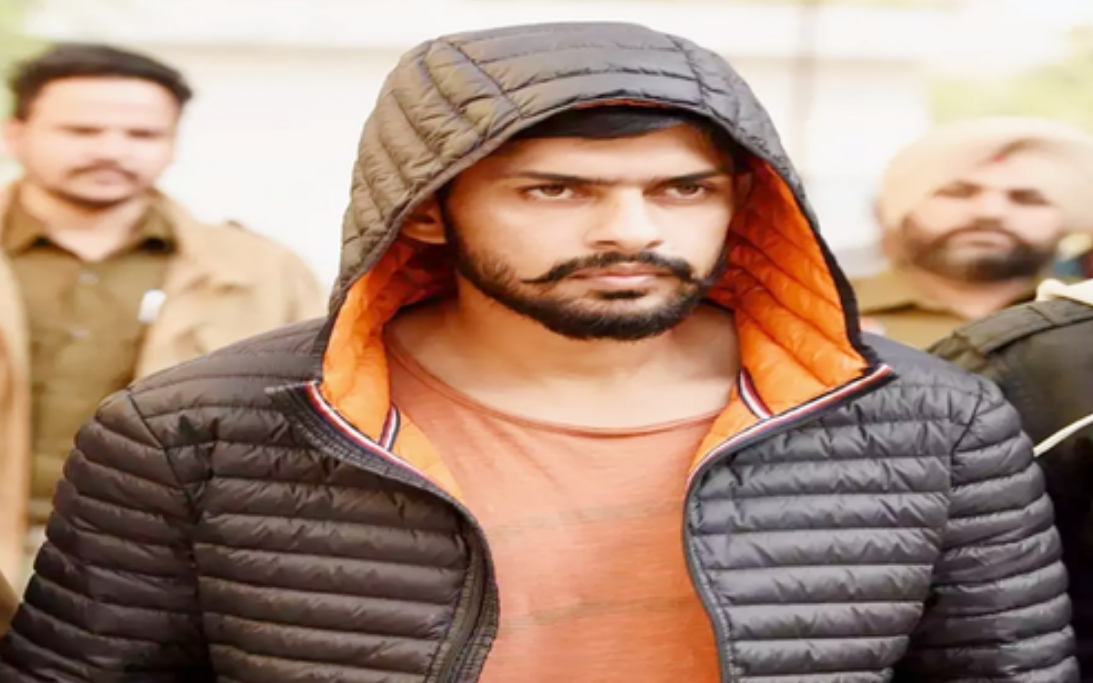
In an analysis published in Saviours Magazine, Rai said gangs emerging from Punjab and Haryana have increasingly developed a transnational structure, with networks such as the Lawrence Bishnoi gang maintaining influence across borders even while senior figures are imprisoned in India.
Rai described the new generation of gangs as more fluid, technology-driven and closely connected to overseas communities. Their growing reach has also attracted judicial scrutiny, with the Punjab and Haryana High Court asking the Haryana government to detail its policies and institutional measures for combating organized crime, including preventive policing, investigations, intelligence gathering and interagency coordination.
The international reach of the Bishnoi network was highlighted in a classified December 2025 Canada Border Services Agency report that later became public during court proceedings. The report, titled “The Bishnoi Gang: An Emerging Threat in Canada,” linked the network to killings, extortion threats and shootings and alleged that immigration pathways had been exploited to move operatives from India to North America.
Lawrence Bishnoi has been held in Ahmedabad’s high-security Sabarmati Central Jail since 2023 under restrictions on his transfer or physical custody by police agencies in other states. His imprisonment, however, has not stopped associates and intermediaries linked to the network from operating.
“Gangsters based in Indian jails operate in tandem with associates in Canada/US/Central Asia,” Rai wrote, saying the networks use social media for recruitment, extortion, contract killings and laundering money generated from the drug trade.
He said the ability of senior gang figures to exercise influence from prison has created a particularly difficult challenge for law enforcement. Phones, intermediaries and other communication channels can allow imprisoned leaders to remain involved in domestic and international criminal operations.
“Their physical absence from the streets does not necessarily mean that their influence has disappeared,” Rai wrote.
The issue received wider public attention after video interviews with Bishnoi surfaced while he was in Punjab and Rajasthan Police custody in 2022. A subsequent investigation alleged police facilitation of the interviews, leading to the dismissal of a deputy superintendent of police and the suspension of six officers.
Rai said publicity itself has become an important tool for criminal groups. Videos and social media posts claiming responsibility for crimes can spread quickly, intimidating potential targets while enhancing a gang’s reputation among possible recruits.
Police in Punjab and Haryana have responded with specialized units, intelligence operations, arrests and prosecutions. Rai, however, argued that arresting individual operatives will not be enough to dismantle organizations that function much like businesses.
“Organised crime is a business,” he wrote. “You don’t shut a business by neutralising its delivery boys.”
Rai said authorities should concentrate on disrupting the wider structure that enables gangs to function. One major area is recruitment, particularly among young people in villages and economically vulnerable communities. He called for preventive efforts involving career counselors, religious leaders, social influencers and political activists to counter the appeal of gang culture.
Another priority is disrupting command-and-control systems used by jailed gang leaders. Rai suggested stronger technological coordination among prisons, police and intelligence agencies, along with measures such as more frequent transfers of high-risk inmates.
Financial investigations are equally important, he said. Extortion, narcotics trafficking and contract killings can generate substantial revenues that allow criminal groups to recruit members, pay operatives and maintain international networks.
Rai called for aggressive financial investigations, confiscation of criminal assets and the creation of a dedicated financial task force to weaken the economic foundations of organized crime.
India has confronted other forms of organized crime in previous decades, including politically connected criminal networks in Bihar, land and mining mafias in Uttar Pradesh and Mumbai underworld groups involved in smuggling, real estate, film financing and hawala operations.
Rai said the Punjab-Haryana model represents a newer phase, describing the networks as “fluid, transnational, Instagram-glorified, and business-driven.”
He said an effective response will require faster trials, witness protection, stronger prison security, intelligence sharing, financial investigations and preventive policing working together.
Rehabilitation programs and legitimate employment opportunities could also make gang membership less attractive to young people and challenge the perception that there is no route back once someone becomes involved in organized crime, Rai argued.
Indian authorities have meanwhile intensified their crackdown on gang networks operating from Punjab and Haryana, including groups linked to Bishnoi.
In July, the U.S.-led Operation Hard Ball resulted in 24 arrests across the United States, Canada and Europe, while 37 members of three Punjab-origin criminal syndicates were charged. The operation targeted networks linked to Bishnoi, Jaggu Bhagwanpuria and Ravinder Dhanda.
Indian agencies have also pursued suspects overseas. Anmol Bishnoi, Lawrence Bishnoi’s brother, was deported from the United States to India in November 2025 and arrested by the National Investigation Agency.
Haryana Police arrested Mamta Rani after her extradition from Russia in a case linked to a Bishnoi associate, while Punjab Police have continued to arrest suspected operatives inside the state.
Spain arrested alleged Bishnoi associate Goldy Dhillon in July following information from Punjab Police, the NIA and Interpol. Haryana gangster Venkat Garg was also extradited from Georgia to face murder and extortion charges in India.
Rai said the broader challenge is no longer simply identifying and arresting individual gunmen, but dismantling an ecosystem capable of recruiting in Indian villages, directing operations from prisons, generating money through crime and maintaining connections with associates overseas. (Source: IANS)