Shashi Tharoor Says New U.S. Envoy Sergio Gor Begins India Posting on the Right Note
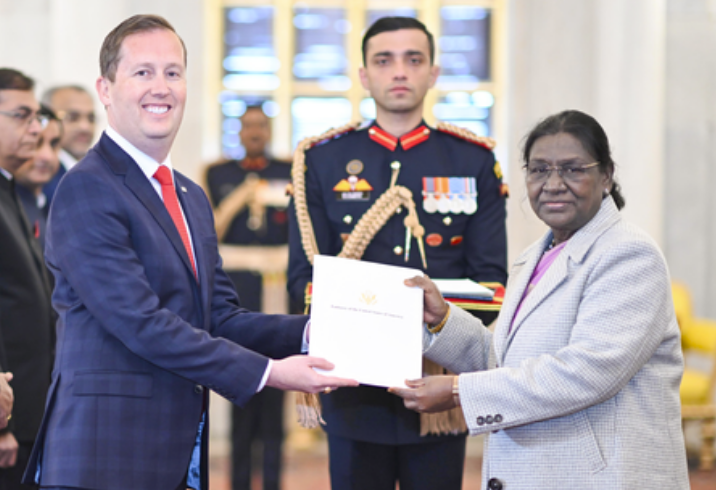

NEW DELHI — Congress lawmaker Shashi Tharoor has described the arrival of Sergio Gor as the United States’ new ambassador to India as a pivotal opportunity to reset strained bilateral ties, arguing that the diplomat must act less like a traditional envoy and more like a “chief restructuring officer” to overcome trade disputes, tariff barriers, and geopolitical differences.
In an opinion piece published Thursday, Tharoor, a former diplomat and chairman of the Parliamentary Standing Committee on External Affairs, said Gor’s first day in New Delhi struck the right tone. Quoting the ambassador, Tharoor wrote that Gor declared, “No partner is more essential than India,” and pledged to pursue “a very ambitious agenda” grounded in a partnership built on “strength, respect and leadership.”
Tharoor noted that Gor also emphasized the maturity of the relationship, saying it is “anchored at the highest levels” and that “real friends can disagree, but always resolve their differences in the end.” At 38, Gor represents a younger generation of American diplomats, Tharoor wrote, one more focused on transactional outcomes than on lofty rhetoric.
According to Tharoor, Gor’s close proximity to President Donald Trump gives India a rare opening to recalibrate relations that have become increasingly fraught over tariffs, market access disputes, and broader geopolitical divergences. While India–U.S. ties are often described as a “natural partnership,” Tharoor argued that recent years have seen friction outweigh cooperation.
He pointed to the imposition of punitive tariffs of up to 50 percent in August 2025, which he said contributed to a 28.5 percent decline in Indian exports to the United States. Even with peace restored in Ukraine, India continues to face tariffs of 25 percent, leaving its exporters at a disadvantage compared with competitors in Southeast Asia, Tharoor wrote.
Beyond tariffs, disagreements over digital services, market access, and medical devices have further eroded trust. India’s continued energy ties with Russia have also complicated Washington’s efforts to isolate Moscow, transforming the economic relationship “from one of cooperation to one of caution,” Tharoor said.
In this context, Tharoor cast Gor as a “chief restructuring officer” tasked with reshaping the relationship from one defined by punitive measures to one based on sustained partnership. Gor’s direct access to Trump, he argued, is his greatest asset, allowing him to bypass bureaucratic inertia and deliver tangible results.
As an early signal of goodwill, Gor announced on his first day that India would be included as a full member of Pax Silica, a U.S.-led supply chain partnership focused on advanced technology. India’s earlier exclusion had been viewed in New Delhi as a slight, particularly given its role in the global artificial intelligence race. Tharoor said the announcement was welcomed as a symbolic correction.
Another key test for Gor will be reviving the Quad Summit, which India was scheduled to host in 2025 but which was postponed amid trade tensions. The Quad, comprising India, the United States, Japan, and Australia, remains central to Indo-Pacific stability. Tharoor said a commitment from Trump to attend a summit in India would send a strong signal of renewed strategic alignment, but warned that Gor’s comment that it may happen “hopefully in a year or two” risks tempering expectations.
Tharoor argued that a Trump visit would allow the U.S. President and Prime Minister Narendra Modi to rekindle their personal rapport and reaffirm cooperation in defense, critical minerals, and technology.
The most pressing challenge, however, remains the tariff dispute. Tharoor said Gor’s success will hinge on negotiating a comprehensive bilateral trade deal that brings tariffs down to levels comparable to Britain’s 15 percent. Such an agreement, he wrote, would reposition India as a pillar of an alternative supply chain to China rather than a target for trade correction.
Only under those conditions, Tharoor added, would proposals such as swapping discounted Russian crude for U.S. liquefied natural gas and Permian Basin oil become politically viable.
Tharoor also flagged concerns in New Delhi over Trump’s renewed praise for Pakistan Army chief Asim Munir, Munir’s repeated visits to Washington, and reports of U.S. interest in Pakistani cryptocurrency and rare-earth minerals. Pakistan’s offer to develop the Pasni port in Balochistan has further unsettled Indian policymakers.
As Gor also holds the title of special envoy for the region, Tharoor warned that balancing ties with both India and Pakistan could test his credibility in New Delhi and raise potential conflicts of interest.
Despite the challenges ahead, Tharoor said Gor’s opening message was encouraging. Quoting the ambassador’s statement that “real friends can disagree, but always resolve their differences in the end,” Tharoor described the start as promising, while cautioning that optimism must be matched by concrete outcomes. (Source: IANS)