India Posts Strong Growth Despite Tough Global Conditions, UN Economist Says

NEW YORK, New York — India is recording “exceptionally high growth” even as the global economy faces significant challenges, a senior United Nations economist said on Thursday, underscoring the country’s position as the world’s fastest-growing major economy.
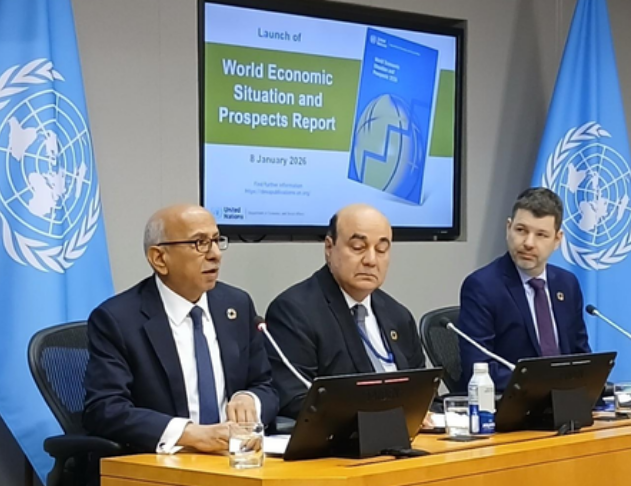
The assessment came at the launch of the UN’s World Economic Situation and Prospects 2026 report, which projected India’s gross domestic product growth at 6.6 percent, maintaining its lead among major economies.
Ingo Pitterle, head of the UN’s Global Economic Monitoring Branch, said India’s GDP growth estimate for last year had been “significantly upgraded” to 7.4 percent, up by 1.1 percentage points from the projection made in the mid-year WESP report released last May. The growth forecast for this year was also revised upward by 0.2 percentage points to 6.6 percent.
The upward revisions, Pitterle said, reflect “an exceptional combination of factors which have all worked in the direction of stronger growth in India, of a very dynamic economy.”
He pointed to strong consumer demand and robust investment activity, particularly public-sector investment, as key drivers. Falling inflation, “partly due to a very abundant harvest,” also allowed India’s central bank to lower interest rates, providing a monetary boost to the economy.
“We had a positive fiscal impulse to investment, and we had a positive impact on GDP from the agricultural sector, on top of all the other strong growth drivers India was having,” Pitterle said.
Shantanu Mukherjee, director of the UN’s Economic Analysis and Policy Division, said the impact of tariffs imposed by U.S. President Donald Trump on Indian goods had been mitigated by India’s diversification of export markets, particularly toward the European Union and the Middle East.
“One of the strongest exports from India at this point in time is services exports, and this has remained resilient, even if merchandise exports have been affected by tariffs,” Mukherjee said.
He added that India’s domestic growth drivers have remained “exceptionally strong,” supported by solid revenue collection.
President Trump has imposed tariffs of up to 50 percent on Indian products, though exemptions and varying rates apply to certain sectors.
The WESP report also highlighted the rapid development of artificial intelligence, noting that it presents both opportunities and challenges for economies worldwide. Mukherjee said India is well positioned to capitalize on AI-driven opportunities by strengthening services exports and leveraging its skilled workforce.
India can “rely on its skilled manpower, to develop some of the applications that will take AI into a productivity boosting factor, rather beyond where it is right now,” he said. (Source: IANS)