Trade Deal Key to Deepening U.S.-India Economic Ties, USIBC Chief Says
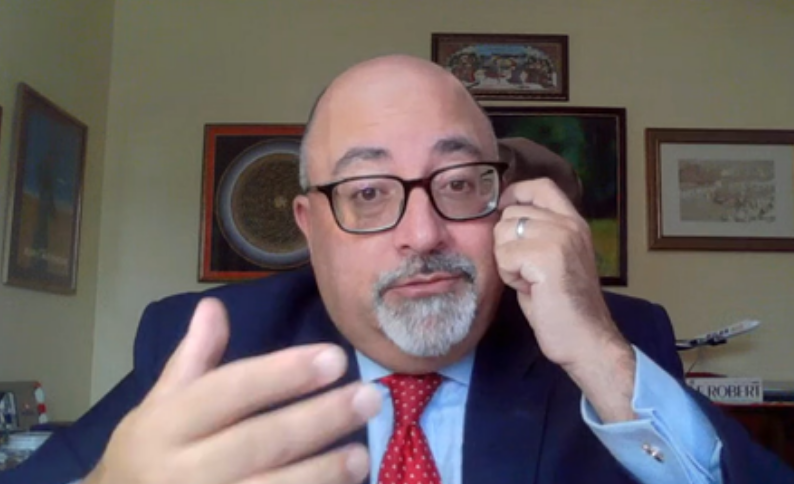

WASHINGTON– The United States and India need to finalize a long-pending trade agreement to unlock deeper economic integration and strengthen business confidence in both countries, Atul Keshap, president of the U.S.-India Business Council, said following a recent visit to India.
Keshap said he traveled to India with USIBC Chair Ed Knight to engage directly with Indian government officials and business leaders and to better understand their views on trade negotiations, investment flows, and economic ties with the United States.
He described the visit as encouraging and said Indian stakeholders emphasized that negotiations with Washington had been pursued seriously over multiple rounds. According to Keshap, Indian counterparts expressed hope that the United States would move toward concluding a trade agreement after what they view as strong proposals from New Delhi.
While declining to discuss specific negotiating details, Keshap said there is broad consensus within the business community on the need for an agreement. He said companies on both sides want a deal that is completed quickly and is ambitious in scope, serving as a foundation for deeper economic integration between the two economies.
On the issue of U.S. tariffs on Indian exports, Keshap said India has taken steps to diversify its export markets to reduce exposure. He noted that Indian merchandise exports to the United States have continued to grow in 2025 despite the tariff environment.
He said tariffs remain a key part of ongoing negotiations, with both sides working to determine where final rates may land. The uncertainty, he added, reinforces the urgency of reaching an agreement, as clarity would help businesses plan investments with greater confidence.
Keshap said a trade deal would send a strong psychological signal to investors in both countries and help reinforce long-term confidence, even as investment decisions continue during negotiations.
He pointed to recent U.S. investment announcements in India across sectors including data centers and artificial intelligence, saying closer economic ties would support collaboration in advanced technologies.
Keshap said reducing tariffs would benefit producers and exporters in both countries and help expand market access. He added that a successful agreement could accelerate progress toward the shared goal of reaching $500 billion in bilateral trade in goods and services.
The talks come amid expanding cooperation between the United States and India in areas such as defense, supply chains, and technology, with bilateral trade continuing to grow and U.S. companies increasingly viewing India as a long-term investment destination. (Source: IANS)