Democracy and Pakistan ‘Don’t Go Together,’ Says MEA Amid Tensions Over Imran Khan’s Incarceration
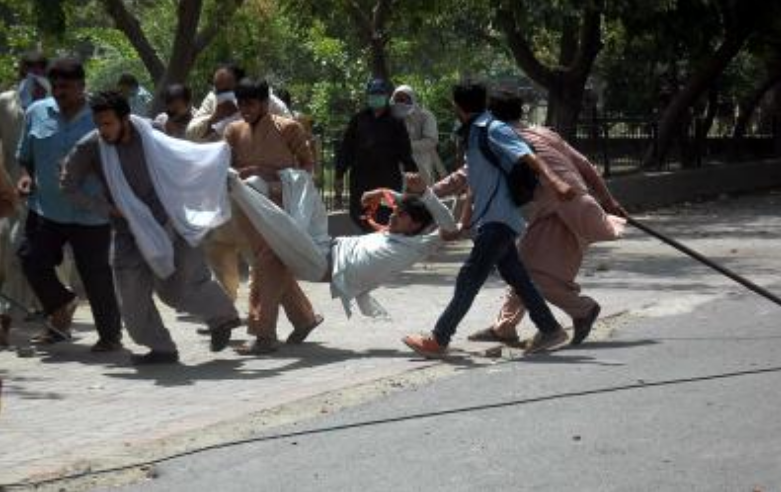

NEW DELHI, India — India on Monday sharpened its criticism of Pakistan’s political turmoil, with the Ministry of External Affairs stating that “democracy and Pakistan don’t go together” as questions continue to swirl around former Prime Minister Imran Khan’s imprisonment and the country’s widening political unrest.
During a weekly media briefing, MEA spokesperson Randhir Jaiswal was asked about Khan’s incarceration and ongoing protests across Pakistan. Jaiswal said India closely monitors developments in the neighboring country but added a pointed assessment of Pakistan’s political system.
“We keep a close eye on every development in Pakistan,” Jaiswal said. “But regarding democracy… democracy and Pakistan don’t go together. The less we talk the better.”
His remarks came as Pakistan grapples with deepening internal instability. Khan, ousted through a no-confidence vote in 2022, has been jailed since August 2023 and faces a string of cases ranging from corruption to terrorism. His party, Pakistan Tehreek-e-Insaf (PTI), continues to demand that authorities allow his family members and party leaders to meet him in Rawalpindi’s Adiala Jail.
Last week, Khan petitioned the Islamabad High Court to permit medical evaluations at Shaukat Khanum Hospital. The plea requested monthly examinations and full access for medical teams in light of his past health issues, according to reporting by The News International. Khan also asked that his medical reports be shared with his family and the court, claiming he is being targeted by the federal government as part of a campaign of political victimization.
Meanwhile, Khan sparked controversy on December 3 with a statement on X accusing Pakistan’s Army Chief, Field Marshal Asim Munir, of “destroying the constitution” and subjecting him and his wife to “severe mental torture.” He alleged he had been held in solitary confinement for weeks without communication or basic entitlements mandated by prison rules.
Khan said even court-ordered meetings had been blocked. “Mental torture is also called torture and is considered a more serious act than physical torture,” he wrote, adding that his sister had been “dragged onto the street” after attempting to visit him.
Despite these claims, Khan’s sister Uzma Khanum told reporters on December 2 that his health was “fine,” though she confirmed he complained of continued psychological pressure and isolation. She was allowed to meet him after repeated refusals by jail authorities.
Khanum described his conditions as restrictive, saying, “He is kept in his room throughout the day, with only a little time to go outside, and there is no communication with anyone.”
The MEA’s latest remarks underscore India’s longstanding skepticism about Pakistan’s democratic institutions, even as Islamabad faces one of its most turbulent political periods in recent years. (Source: IANS)