US Sees India as Key AI Partner Amid Growing China Challenge
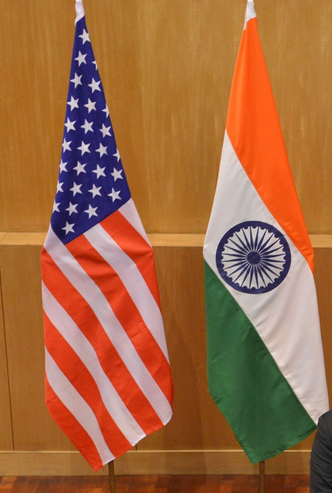

WASHINGTON, D.C. — India’s role as a critical technology and strategic partner featured prominently this week as top U.S. lawmakers and experts warned that the global race for artificial intelligence is entering a decisive phase shaped by China’s rapid military and industrial adoption of AI and by tightening U.S.-led semiconductor controls aimed at preserving a technological edge.
During a Senate hearing on Tuesday, witnesses stressed that the coming year will require deeper coordination among democratic partners — including India — to shape global AI standards, secure chip supply chains and counter Beijing’s ambitions. The Senate Foreign Relations Subcommittee on East Asia, the Pacific and International Cybersecurity Policy convened the session to review geopolitical risks arising from China’s accelerating use of AI.
India surfaced early in the discussion as a pivotal country in the emerging AI governance framework. Tarun Chhabra, a former White House national security official now at Anthropic, directly linked India to the future of trusted AI development. “The closest thing we have right now is the AI summits that are happening,” he said, noting that “there’s one coming up in India,” which he called an opportunity to build a trusted AI framework among democracies. India is scheduled to host a major AI summit in February 2026.
Chhabra described the next two to three years as a “critical window” for frontier AI development and global diffusion. Warning that China cannot produce competitive AI chips unless the United States loses its lead, he urged stricter controls to prevent “CCP-controlled companies” from filling their data centers with American hardware.
Senators Pete Ricketts and Chris Coons framed the AI contest in stark strategic terms. Ricketts compared it to the Cold War space race, calling artificial intelligence a domain that will determine both daily life and the global balance of power. “Beijing is racing to fuse civilian AI with its military to seize the next revolution in military affairs,” he said.
Coons emphasized that U.S. and allied leadership in AI must rest on “our chips, our cloud infrastructure and our models,” warning that China has “poured money into research, development, deployment” and aims to become the world’s leading AI power by 2030. He said maintaining AI primacy must be “a central national imperative.”
Experts testified that China’s military integration of AI is accelerating. Chris Miller of AEI noted that Russia and Ukraine already rely on AI to analyze battlefield intelligence and argued that the same tools are becoming essential to defense planning. Gregory Allen of CSIS said AI is becoming a foundational technology across military, intelligence and economic sectors and warned that losing the AI advantage would undermine U.S. military power. He praised chip export controls as the most consequential U.S. action of recent years, arguing they have prevented China from building the world’s largest data centers.
Allen also opposed giving Chinese firms remote access to U.S. cloud computing, saying it would help them “build their own platforms” before they cut off American companies. Another expert, James Mulvenon, said the PLA is integrating large language models “at every level of its system,” constructing an AI-driven decision framework it believes to be superior to human cognition. He added that Beijing is confident it can obtain restricted Western chips through “smuggling and a planetary scale level of technology espionage.”
All four witnesses rejected allowing exports of NVIDIA’s advanced H-200 or Blackwell chips to China. Allen said Blackwell processors “do what Chinese chips can’t” and warned that selling them would provide Beijing “a bridge to the future” it currently cannot build.
For India, the hearing underscored both opportunities and obligations as global AI rules and semiconductor ecosystems undergo rapid change. India’s growing partnership with the United States in critical and emerging technologies aligns with Washington’s push for a “democratic tech stack” to counter China’s AI expansion.
The upcoming AI summit in India — highlighted by Chhabra — reflects New Delhi’s expanding role in shaping standards, safety protocols and supply-chain security at a time when the global AI architecture is being rewritten. India, which faces Chinese military pressure along the border and increased PLA deployment of AI-enabled surveillance and unmanned systems, has a direct stake in the outcome of U.S.-China technology competition.
Both countries are deepening cooperation in semiconductors, cloud infrastructure, cybersecurity and dual-use AI applications — a trajectory likely to accelerate as Washington formalizes new AI controls and India expands its own semiconductor and digital-governance footprint. (Source: IANS)